
Every January, the Kansai region—including Osaka, Kyoto, and Kobe—comes alive with the festive energy of Toka Ebisu, a vibrant celebration honoring Ebisu, the god of business prosperity and good fortune. This three-day festival, held from January 9th to 11th, is one of the most iconic events in the region, drawing millions of visitors from across Kansai and beyond.
At the heart of the celebration is Imamiya Ebisu Shrine in Osaka, renowned for blessings of business success. Visitors come to pray for prosperity in their ventures and personal endeavors. Ebisu is often depicted as a cheerful, bearded man holding a fishing rod and a sea bream, and if you enjoy beer, you might even recognize him from convenience store beer corners, where his image appears on golden cans.

Ebisu, the god of business prosperity and good fortune, is often depicted holding a fishing rod and a sea bream. Many visitors recognize him from the golden beer cans commonly seen in Japanese convenience stores.
A key highlight of the festival is the purchase of “Fukusasa”—lucky bamboo branches decorated with charms meant to bring wealth and good fortune in the year ahead. Many visitors customize their Fukusasa with additional ornaments symbolizing luck, such as gold coins, sea breams, and rice bags.
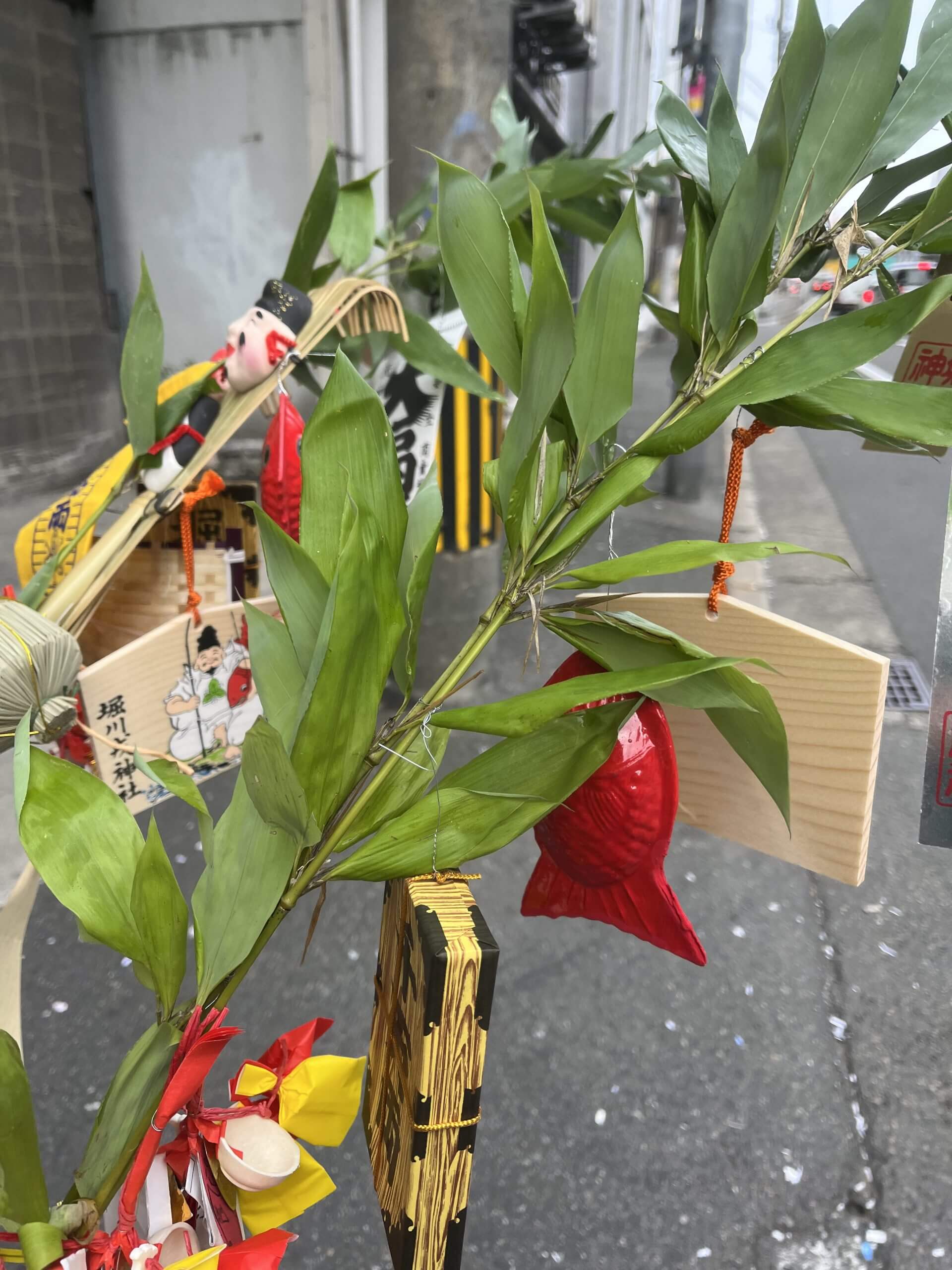
Fukusasa (lucky bamboo) decorated with charms for prosperity at Imamiya Ebisu Shrine.
Fukumusume: The Festival’s Lucky Maidens
One of the most beloved traditions of Toka Ebisu is the presence of Fukumusume, or “Lucky Maidens.” At major shrines like Imamiya Ebisu, they are carefully selected each year through a formal process, and it can be highly competitive—sometimes with more than 40 applicants for each position—making it a great honor to represent the shrine.
Smaller shrines, however, sometimes allow local participants to join without a formal selection, adding a more community-focused and relaxed touch to the festival. Regardless of the process, the Fukumusume greet visitors with warm smiles and blessings for prosperity, chanting the traditional phrase “Shobai Hanjo!” (“Business success!”).

Fukumusume, or “Lucky Maidens,” wearing traditional kimono at the Toka Ebisu Festival.
Festivals Beyond Imamiya Ebisu
While Imamiya Ebisu Shrine is the most famous location for Toka Ebisu, this festival is celebrated at Ebisu shrines across Japan, particularly in the Kansai region.
One of the other prominent locations is Nishinomiya Ebisu Shrine in Hyogo Prefecture, often referred to as “Nishinomiya no Ebe-san” by locals. This shrine is known for hosting the Fukuotoko Contest, a thrilling race held on the early morning of January 10th, where participants compete to be the first to reach the main hall and earn the title of “Fukuotoko” or “Lucky Man.” The contest draws both participants and spectators, making it one of the festival’s most exciting highlights.
- Horikawa Ebisu Shrine in Osaka, which also attracts a large number of visitors.
- Ebisu Shrine in Kyoto, where a more intimate and serene atmosphere can be enjoyed.
- Wakamatsu Ebisu Shrine in Fukuoka, which features its own unique local traditions, including the Fukusasa Lottery (Fukusasa Fukubiki)
Each shrine has its own charm, but the spirit of Toka Ebisu—a wish for prosperity and good fortune—remains the same everywhere.

Horikawa Ebisu Shrine, another Osaka’s Ebisu shrines, which is smaller than Imamiya-Ebisu but located in the city center.
A Festive Atmosphere
Beyond the shrine, the streets of Osaka and the wider Kansai region come alive with food stalls, game booths, and lively crowds enjoying the festive spirit. The cheerful calls of vendors and the delicious aroma of traditional snacks create an unforgettable experience for visitors of all ages.
A major highlight of the festival is the Hoekago Parade at Imamiya Ebisu Shrine, a tradition spanning over 200 years. It began when geisha from Osaka’s Minami district rode in elaborately decorated palanquins to visit the shrine. During its peak from the late 19th century through the early 20th century, up to 100 palanquins competed in splendor, creating a dazzling spectacle.
Today, the parade continues with a vibrant mix of participants, including geisha, Bunraku puppeteers, local performers and entertainers from Osaka’s comedy and theater scene, professional athletes, Fukumusume, and representatives from the Minami (Dorombori area) shopping district. This blend of historical and contemporary figures makes the Hoekago Parade a must-see highlight of the Toka Ebisu Festival, attracting visitors from across the Kansai region.

Food stalls line the streets around Ebisu Shrine during Toka Ebisu, adding to the lively and festive atmosphere of the Kansai winter celebration.
If you’re in Japan in January, don’t miss the chance to experience this cherished tradition, meet the Fukumusume, and start your year with a wish for prosperity and good fortune!

tokie
最新記事 by tokie (全て見る)
- Best 4 Okinawa remote Islands Worth the Trip - 09/06/2026
- Shigaraki Pottery Village & Tanuki - 20/05/2026
- Types of Bento Boxes in Japan: How to Choose Yours - 23/04/2026