
Japan has a rich bento culture.
A bento is a Japanese-style packed meal, often carefully arranged with rice and side dishes in a single box.
One of the most overlooked parts of this culture is the bento box itself.
From cheap plastic containers to handcrafted wooden boxes, the type you choose actually changes:
- how your food tastes
- what kind of meals you prepare
- how easy your daily routine is
- and even how you feel about preparing meals
So, which one should you choose?
To give you a realistic answer, here’s how I actually use different types of bento boxes in daily life.
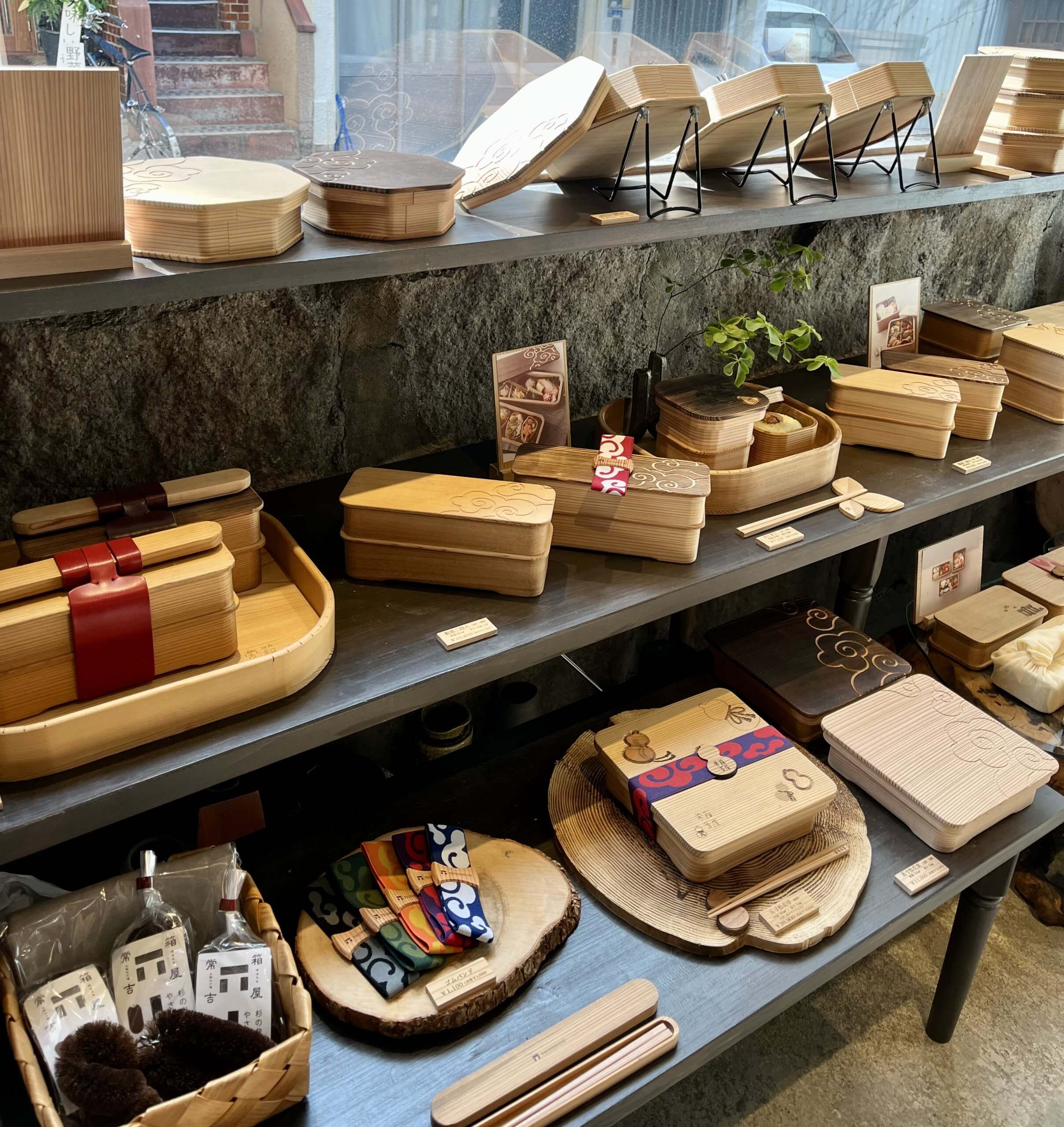
Inside the bentobox workshop, where traditional wooden bento boxes are displayed.
Different Types of Bento Boxes in Japan
1. Simple Plastic Bento Boxes (Budget & Everyday Use)
The most common option in Japan is a simple plastic bento box.
You can easily find them at 100-yen shops like Daiso or Seria, as well as lifestyle stores like Tokyu Hands and shopping malls.
They often come in cute designs and are extremely practical.
Best for:
- Kids (especially kindergarten lunches)
- Casual daily use
- Anyone who wants convenience
Pros:
- Cheap and easy to replace
- Lightweight
- Low maintenance
- Some are microwave-safe (but you need to check before buying)
Cons:
- Less durable over time (can wear out with frequent use)
- Doesn’t enhance the taste of food
Honestly, this is what most people use—and for good reason.
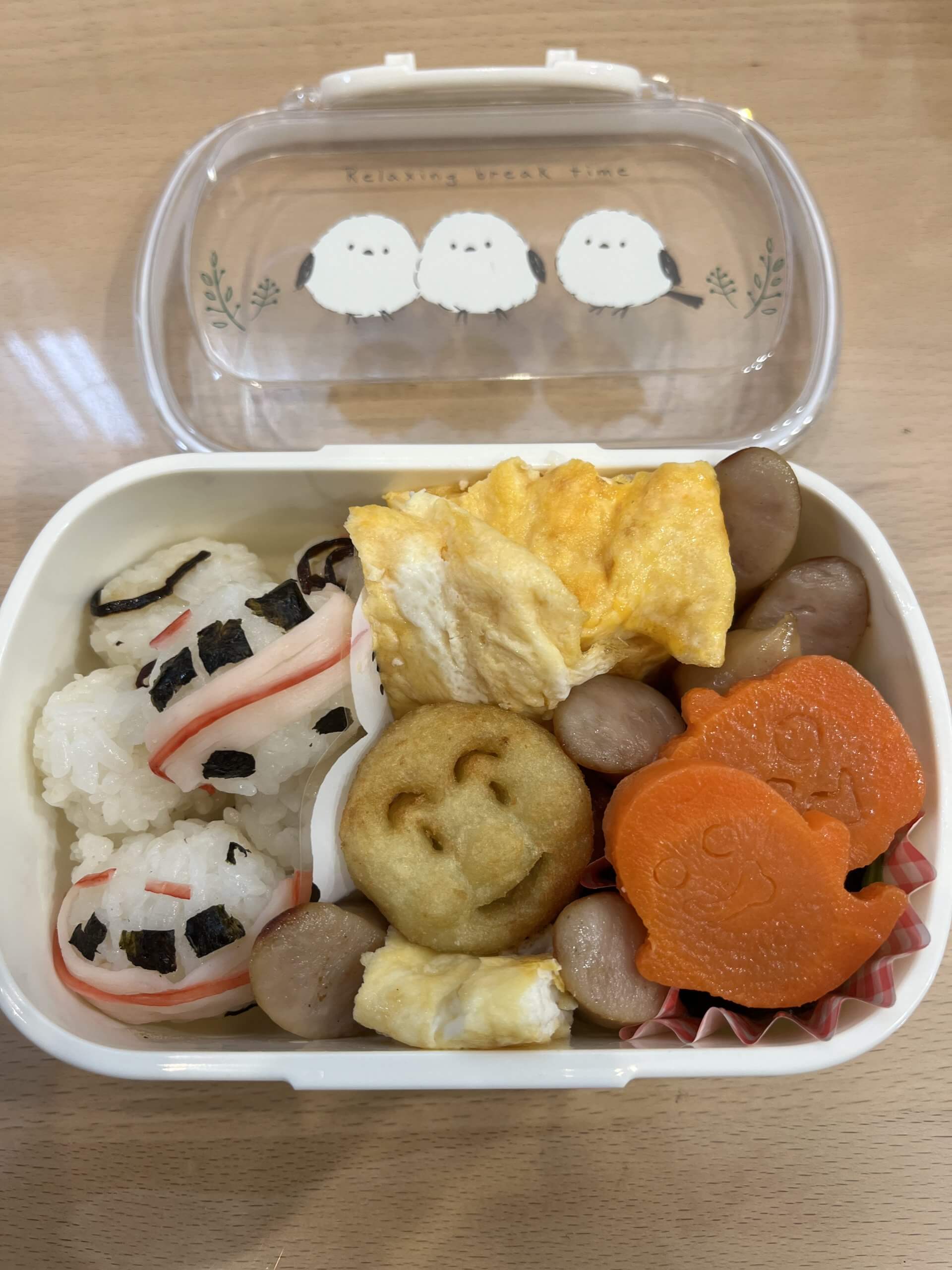
A simple homemade lunch in a plastic bento box. The ambulance-shaped rice ball was a special request from my son. Don’t say I’m good at cooking or not !
2. Plastic Bento with Ice Pack (Summer Essential)
These are similar to regular plastic boxes but come with space for an ice pack.
Best for:
- Summer lunches
- Food safety in hot weather
In Japan, this is especially common for kids’ lunches during hot months.
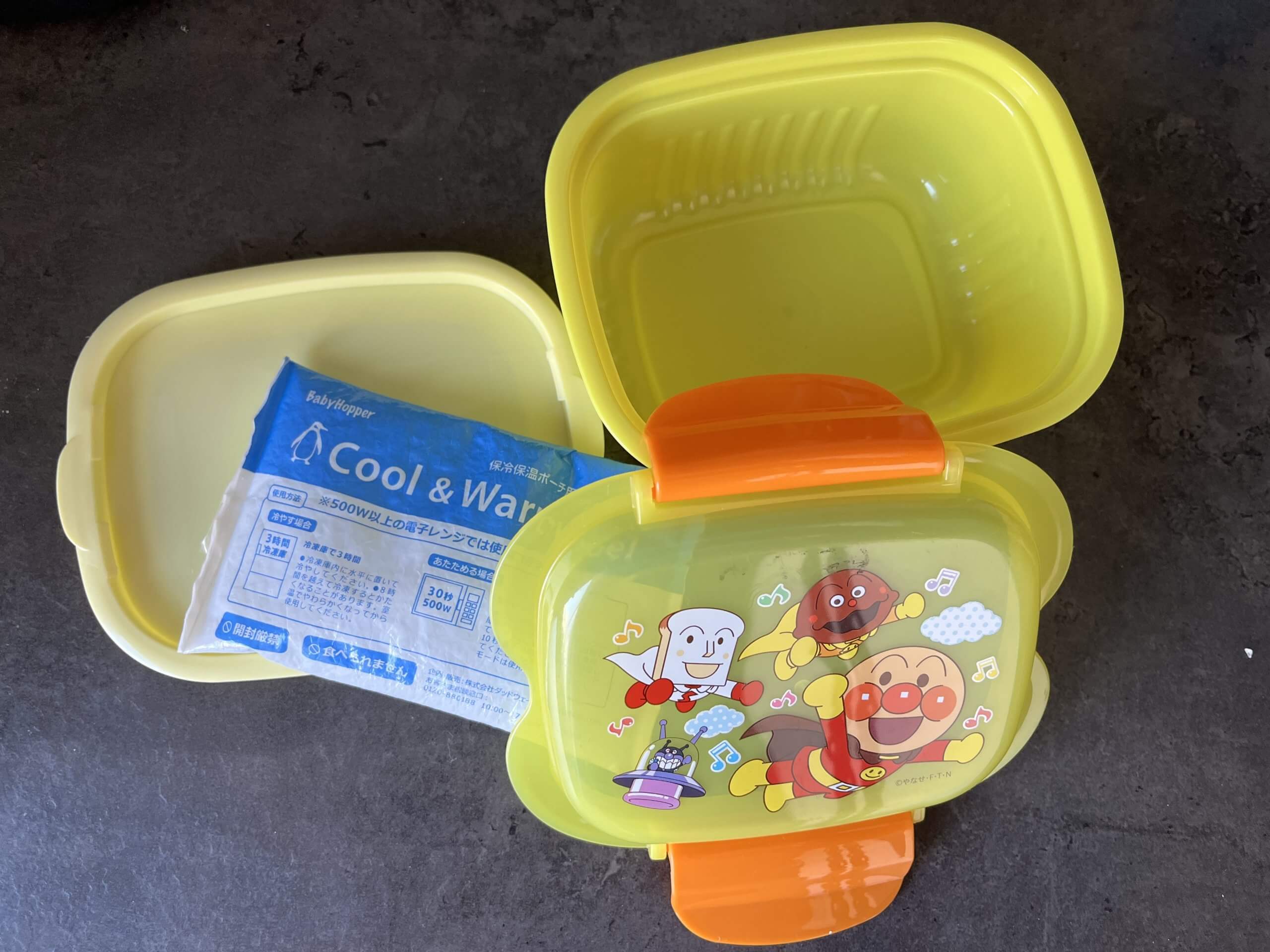
A plastic bento box with an ice pack, ideal for keeping food fresh during hot summer days.
3. Thermal Bento Boxes (For Hot Meals)
These are insulated, often two-tier containers.
Some versions even include soup jars (similar to a Thermos Food Jar).
Best for:
- Rice bowls (donburi)
- Heavier meals
- People who want hot food
Pros:
- Keeps food warm
- Great for large portions
- Some are microwave-safe (depending on the model, so always check before buying)
Cons:
- Can be bulky and relatively heavy (especially high-performance ones)
- Lower-cost options tend to have weaker heat retention
Very popular among men or anyone with a bigger appetite.
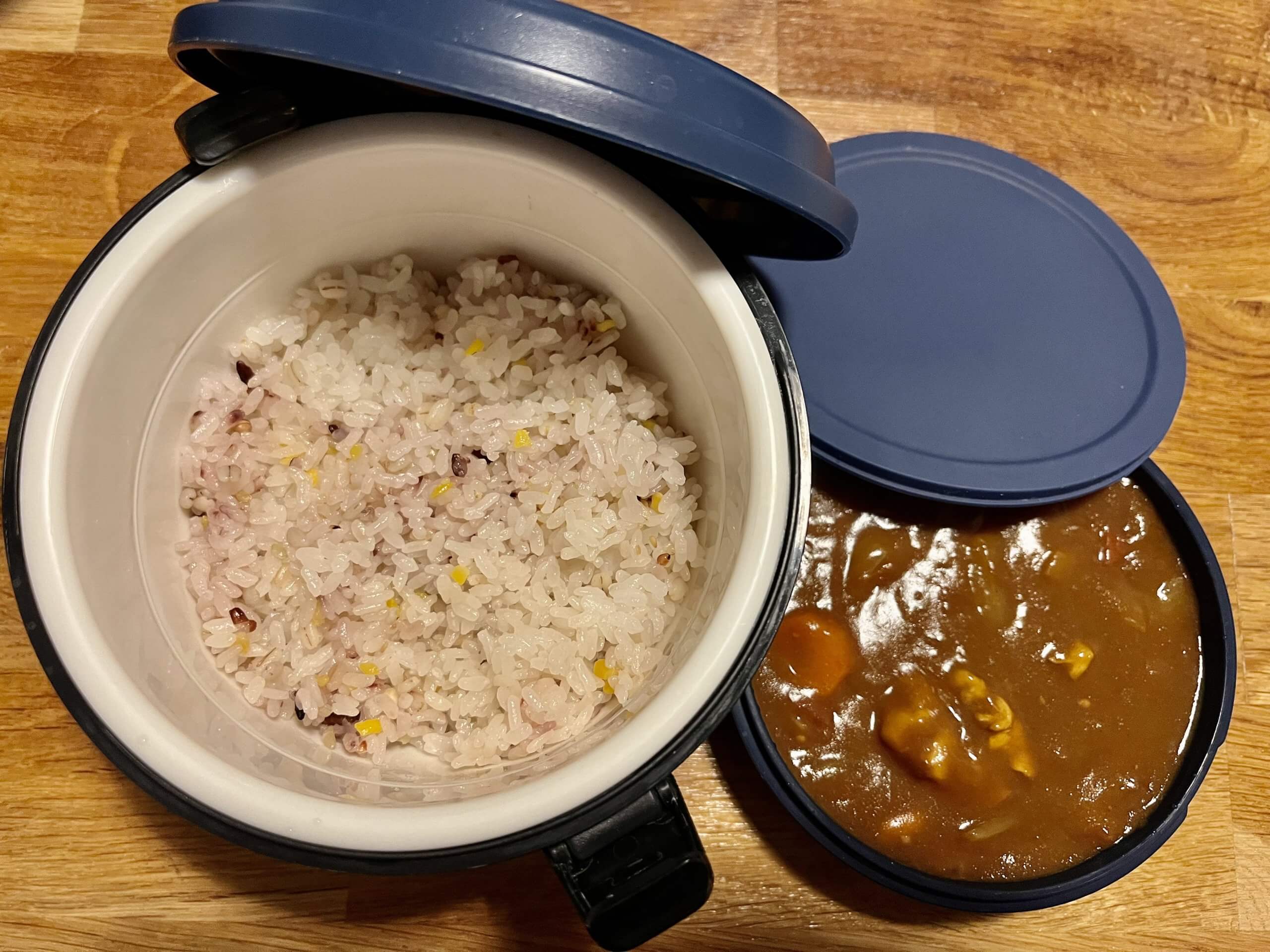
A thermal bento box filled with curry and rice, perfect for warm and hearty meals.
4. Cedar Wood Bento Box (Everyday Use, but Elevated)
I personally rotate between a thermal bento and a traditional wooden bento box for daily use for my husband’s lunch.
The wooden one I use is from Hakoya Tsunekichi, a long-established workshop in Osaka with over 150 years of history.
They specialize in unpainted cedar bento boxes designed to “breathe.”
The key idea is that once cedar is painted, it loses its ability to breathe.
By keeping the wood uncoated, it can regulate moisture, has natural antibacterial properties, and helps maintain the quality of the food inside—especially rice.
This “breathing” concept was explained to me by the craftsman’s wife, who mainly handles sales at the workshop.
She spoke about it in a very practical way, but also with a deep understanding of how the boxes are meant to be used in everyday life.
How I use it:
I use a traditional wooden bento box with two tiers.
One tier is for rice, and the other is for side dishes.
(Of course, plastic bento boxes also come in two-tier versions, so this structure itself isn’t unique to wooden ones—it’s more about the material.)
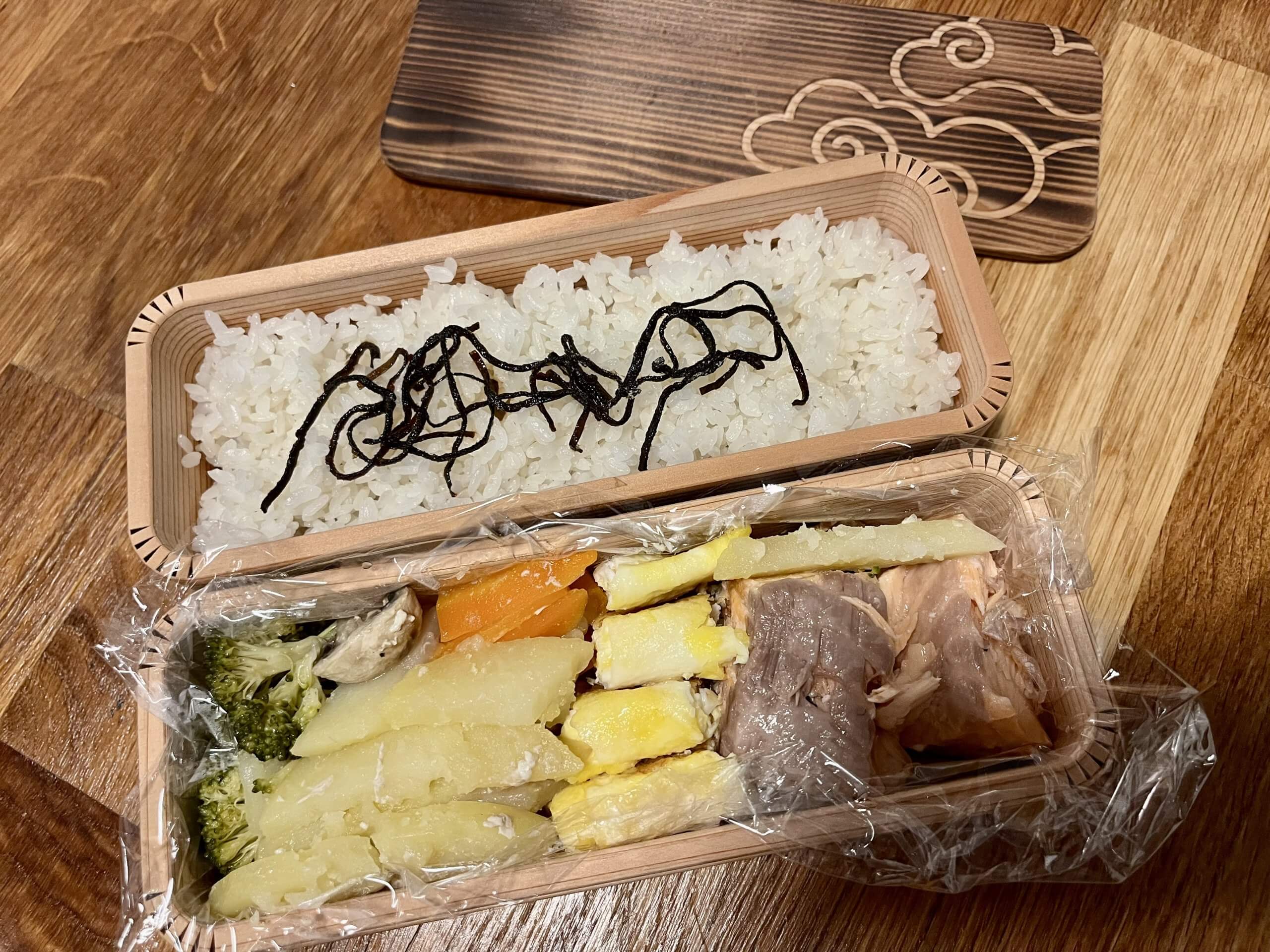
Even with a very simple meal, the wooden box somehow makes it feel a bit more special.
5. Large Octagonal Wooden Bento (For Special Occasions)
I also own a larger octagonal wooden box.
This one is not for daily use.
How I use it:
- Family picnics
- New Year’s food (osechi)
- Serving sweets during gatherings even at tea ceremony
It turns food into something more presentable—almost like a small event.
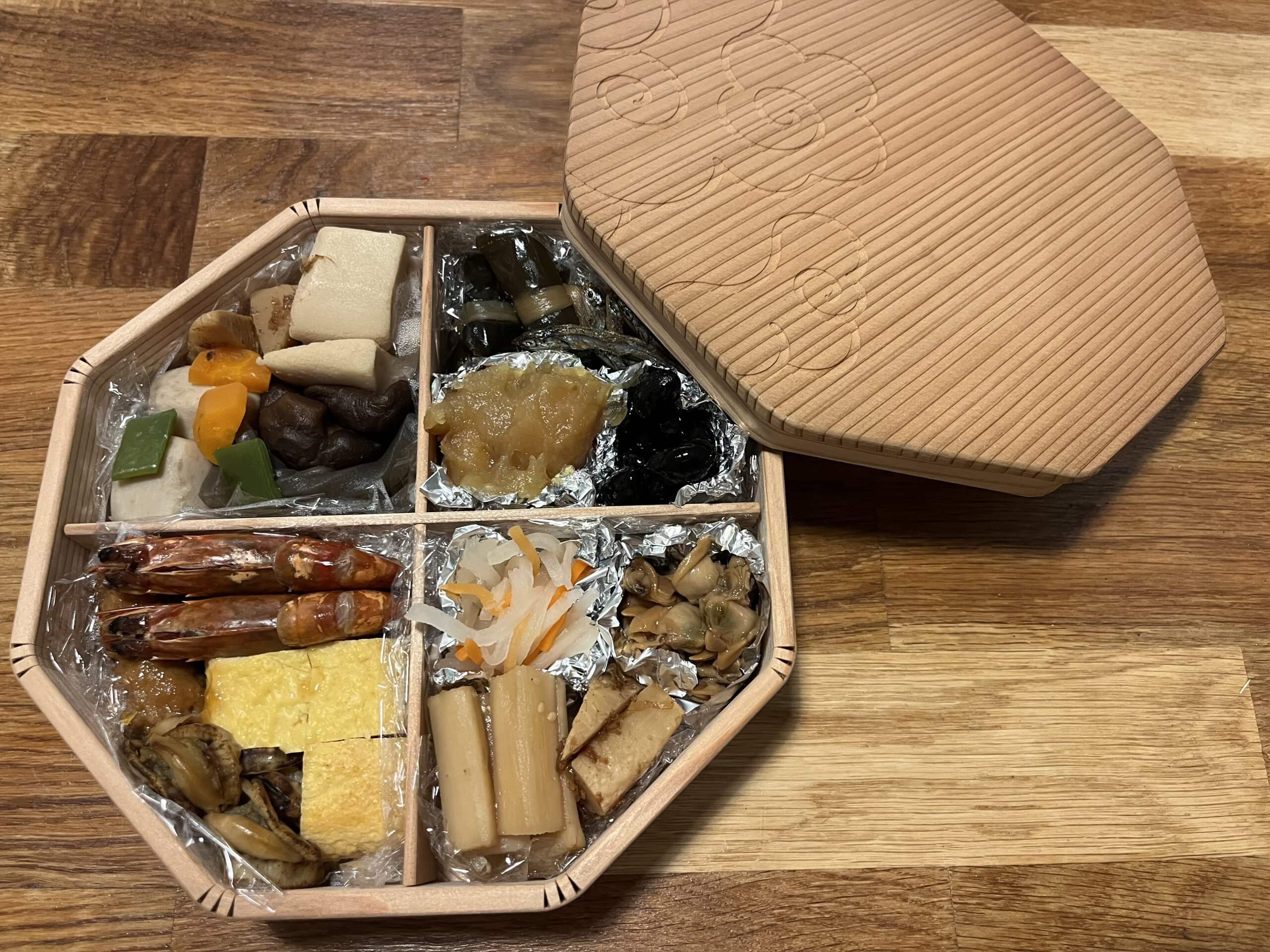
A large octagonal wooden box used for special occasions like New Year’s osechi or family gatherings.
What makes it special:
・The smell of cedar is incredible—it doesn’t disappear even after repeated use.
It stays subtle but definitely noticeable every time you open the box.
・Rice actually tastes better.
It might not be only about rice, but that’s the one my husband notices the most.
This might sound subjective, but in Japan, this is widely appreciated.
Honestly, not many people bring a real wooden bento box to work anymore, so when he first used it, it apparently caused a bit of a reaction at the office—his colleagues were surprised and curious about it.
The downside (and it’s real)
Let’s be honest—this is not for everyone.
Needs a full day to dry after washing, which is why I can’t use it every day.
Should ideally be cleaned with a natural brush (like a palm scrub), and not with detergent, since the wood can absorb smells.
It also requires occasional maintenance, such as applying beeswax to protect the surface.
All of this means it simply takes time—and effort—to care for.
That’s one of the reasons I rotate it with other types of lunch boxes in daily use.
For example, I switch between the wooden bento box and a thermal lunch container, especially for donburi-style meals or more flexible menus. The thermal one is useful when I want something simple and quick, while the wooden one is more for days when I want to prepare something a bit more carefully.
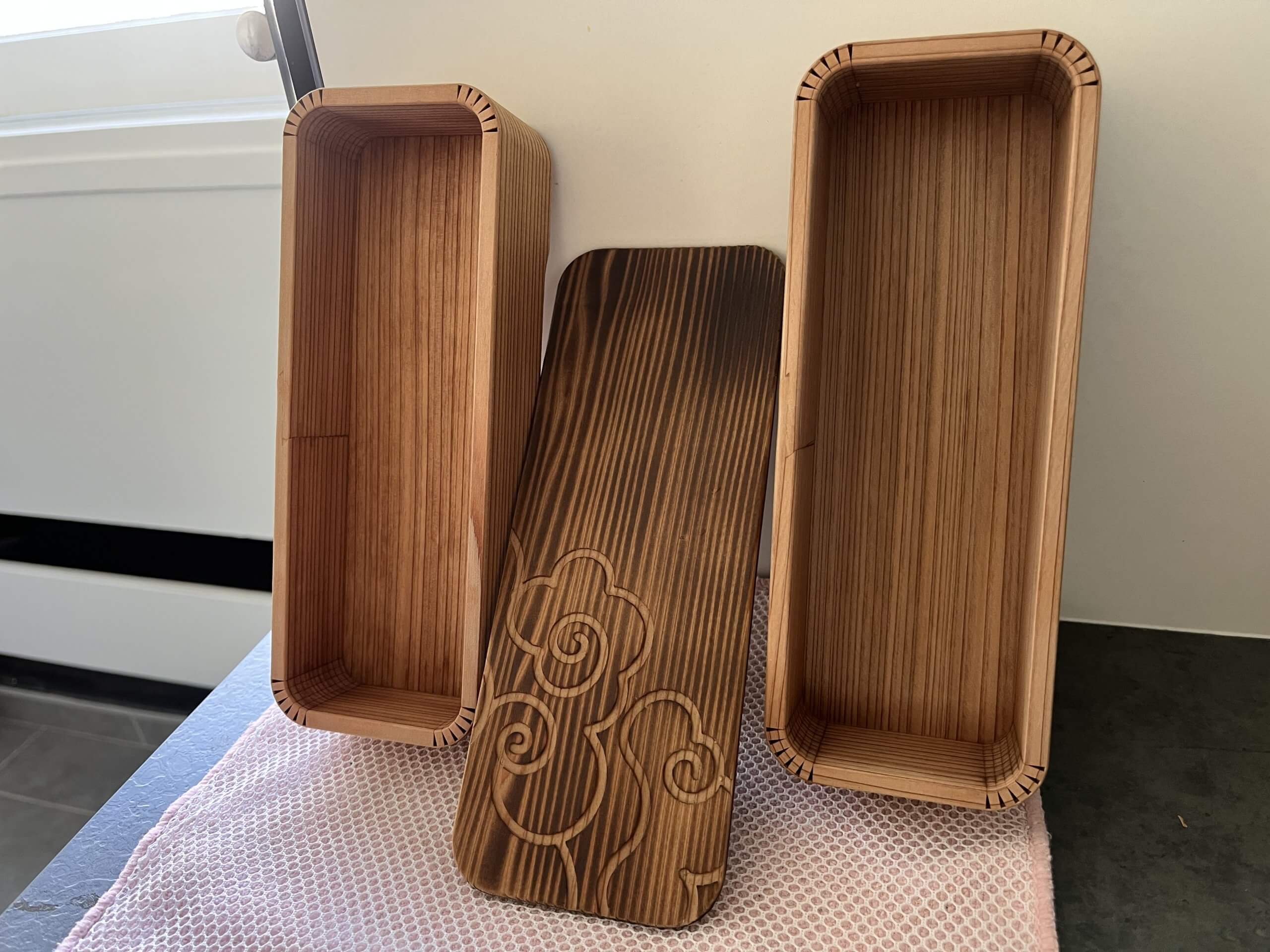
A wooden bento box drying after washing. Since it takes time to fully dry, I rotate it with other lunch boxes in daily use.
But here’s the deeper value behind this way of thinking.
In traditional Japanese culture, it’s not just about the object itself—but also about the time and care involved in using it.
Things like kimono, for example, are often seen as “inconvenient” in modern life because they take time to put on and require a certain process.
Tea ceremony is another example, where even simple actions are done without shortcuts, as part of the experience for the guest.
The same idea applies to wooden tools and their maintenance.
Washing, drying, and caring for them properly all take time.
But that time is not wasted.
It creates space in daily life—space to slow down, focus, and be more present.
Not because it makes life easier, but because it removes the idea that everything has to be fast.
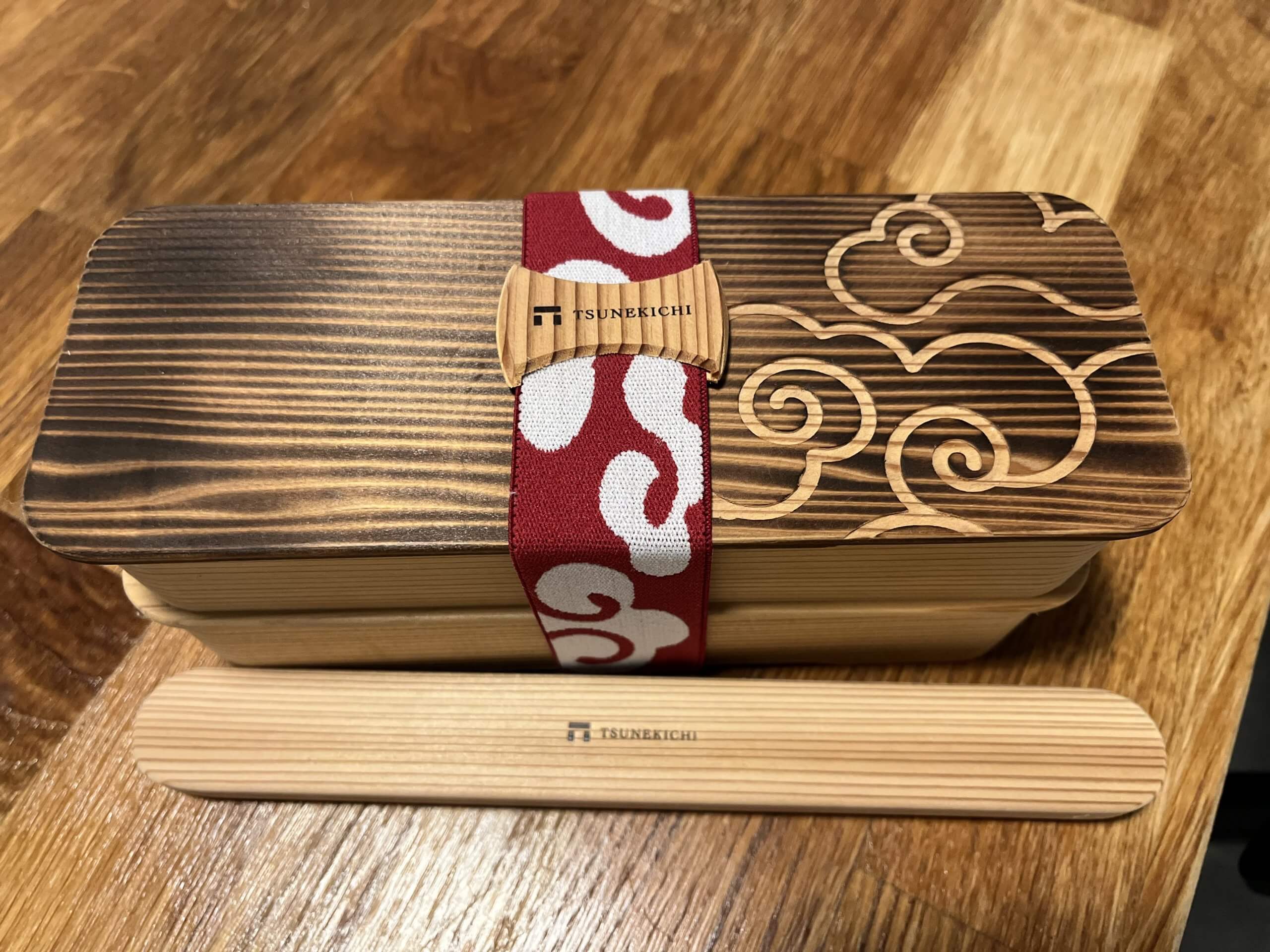
The two-tier bento box with chopsticks and a band for securing it, showing how it is used in everyday life.
Is It Worth the Price?
Let’s not sugarcoat it.
A handcrafted wooden bento box can cost 100 times more than a 100-yen plastic one.
That’s a big jump.
But:
- It’s natural material
- Handmade
- Long-lasting (if maintained properly)
So the real question is not “Is it expensive?”
It’s “Do you value this kind of experience?”
Where to Experience This in Japan
If you’re interested, there is also a hands-on experience in Osaka where you can actually make your own wooden bento box through Hakoya Tsunekichi, available via Wabunka.
Unlike simply purchasing a finished product, this experience lets you work directly with the craftsman.
He guides you through the actual process of making the box, not just in terms of technique, but also in how to handle and care for the wood in daily use.
You can also hear more detailed explanations about:
- why cedar is used
- how the material behaves over time
- and how traditional wooden products are meant to be used in everyday life
It’s not just about making a bento box—it’s about understanding the thinking behind it.
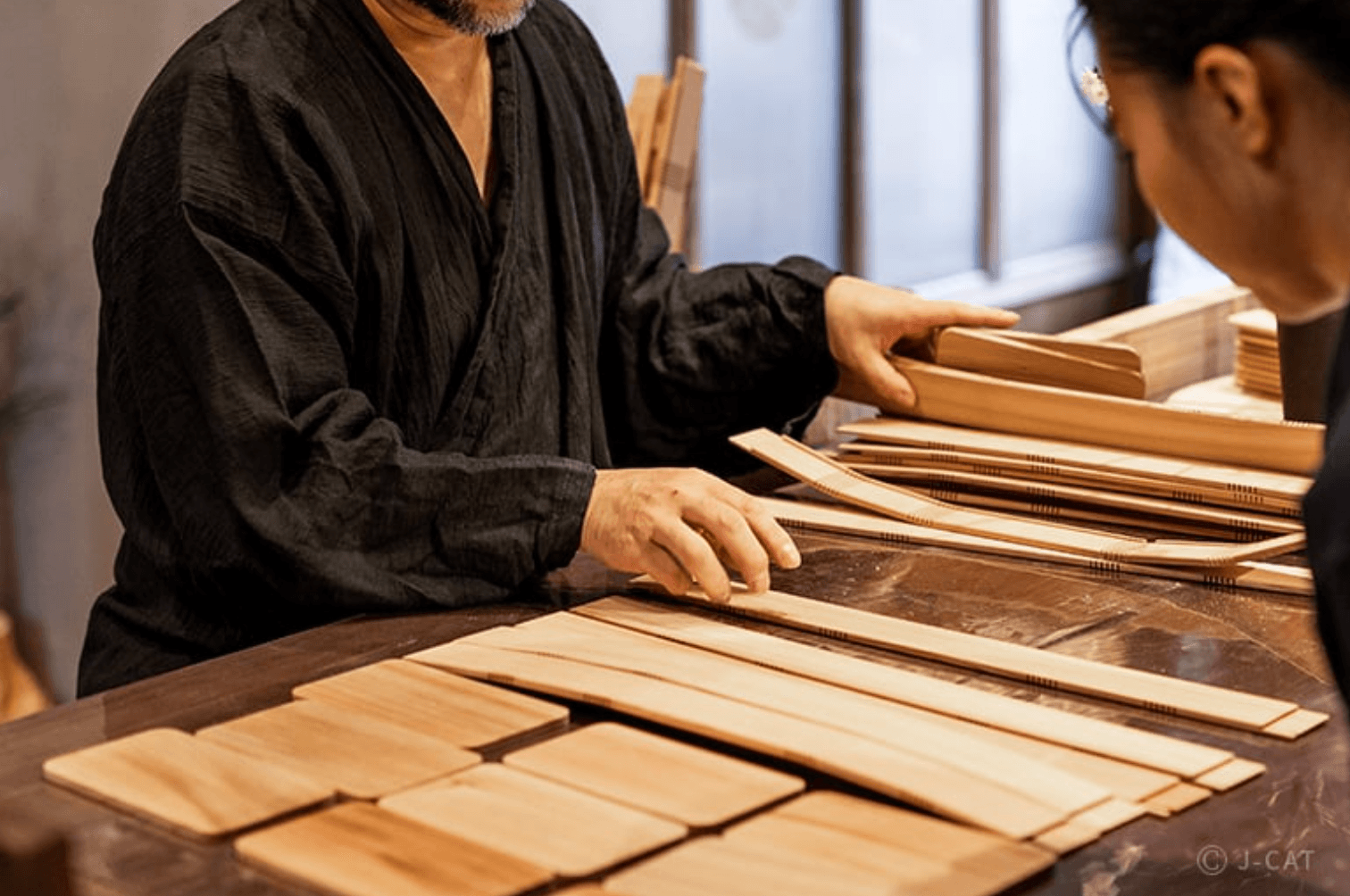
A hands-on experience where visitors can learn directly from craftsmen and make their own wooden bento box. (photo credit : Wabunka)
Final Thoughts
Not everyone needs a wooden bento box.
In fact, for busy daily life—work, childcare, and everything in between—plastic and thermal options are often more practical and realistic.
And that’s exactly why I don’t rely on only one type of bento box.
At the same time, I do like the idea of bringing at least one “careful, intentional object” into daily routines.
That’s where the wooden bento box comes in for me.
The wooden bento box I use was actually something I chose partly as a birthday gift for my husband, who appreciates craftsmanship and traditional handmade work.
From my perspective as someone who gave it, I also felt that it was something worth taking care of properly—something that gains value the more it is used and maintained.
At the end of the day, there is no single “correct” type of bento box.
Different lifestyles call for different tools, and using them in combination often makes the most sense.
So rather than trying to find the perfect one, it might be better to choose something that fits your own rhythm of life—and maybe even adds a small sense of appreciation for time, materials, and the people who make them.

tokie
最新記事 by tokie (全て見る)
- Shigaraki Pottery Village & Tanuki - 20/05/2026
- Types of Bento Boxes in Japan: How to Choose Yours - 23/04/2026
- How Much English Actually Works in Japan when traveling ? - 15/04/2026