
When you travel around Japan, you may notice cheerful tanuki statues standing at the entrance of restaurants, shops, gardens, and traditional inns.
With their round bellies, straw hats, and friendly smiles, they seem to appear everywhere.
So where do these tanuki come from?
Visit Shigaraki, a pottery village hidden in the mountains of Shiga Prefecture, and you’ll discover their hometown.

You will find tanuki statues of every shape and size throughout Shigaraki.
1. About Shigaraki Village
Shigaraki is known as one of Japan’s oldest and most famous pottery towns. Its history dates back more than 800 years, and Shigaraki ware is considered one of the “Six Ancient Kilns” of Japan.
The village lies in southern Shiga Prefecture, east of Kyoto. The prefecture is famous for Lake Biwa, the largest lake in Japan.
Interestingly, this area was once chosen as the site of Japan’s capital in the 8th century. However, the imperial court stayed only a few years before moving back to Nara.
Although it requires a few train transfers from Kyoto or Osaka, visiting Shigaraki makes a great countryside escape from the city.
From Kyoto or Osaka, take JR trains to Kibukawa Station, then transfer to the charming Shigaraki Kogen Railway for Shigaraki.
- About 2 hours from Osaka
- About 1.5 hours from Kyoto
As soon as you arrive at Shigaraki Station, a giant tanuki statue greets visitors at the exit. The statue even changes outfits with the seasons, making it fun to visit year-round.

The famous tanuki at Shigaraki Station changes costumes throughout the year.
2. Why Are Tanuki Statues Made Here?
The secret lies in Shigaraki’s clay.
Shigaraki clay is highly heat-resistant, durable, and flexible, making it ideal for large ceramic works. For centuries, local artisans have produced not only bowls and plates, but also water jars, hibachi braziers, garden pottery, and giant statues.
Among them, the tanuki became the symbol of the town.
The popularity of Shigaraki tanuki statues grew dramatically in 1951, when Emperor Showa visited the village. Local potters lined the streets with tanuki statues to welcome him, and the emperor was so delighted that the statues became famous throughout Japan.

Even the tanuki in Shigaraki have their own unique personalities.
Traditional Shigaraki tanuki are said to carry eight lucky features, each representing good fortune:
- A straw hat for protection from unexpected trouble
- Big eyes to notice opportunities
- A cheerful smile for friendliness
- A large belly symbolizing calmness and boldness
- A sake bottle representing virtue
- A promissory note for trust
- A thick tail for stability
- And a friendly appearance that invites prosperity
Once you start exploring the village, you’ll realize tanuki are everywhere — standing in front of shops, hidden beside houses, peeking out from gardens, and sometimes appearing in enormous sizes.
It almost feels as if the whole town is watching you with smiling ceramic faces.

Some tanuki seem to be enjoying onsen as much as visitors do.
3. Finding Pottery in Shigaraki
No visit to Shigaraki is complete without bringing home some pottery.
The variety is enormous. You’ll find everything from tiny chopstick rests and coffee cups to elegant vases, sinks, and garden pieces.
And of course, countless tanuki statues are waiting to move into a new home.
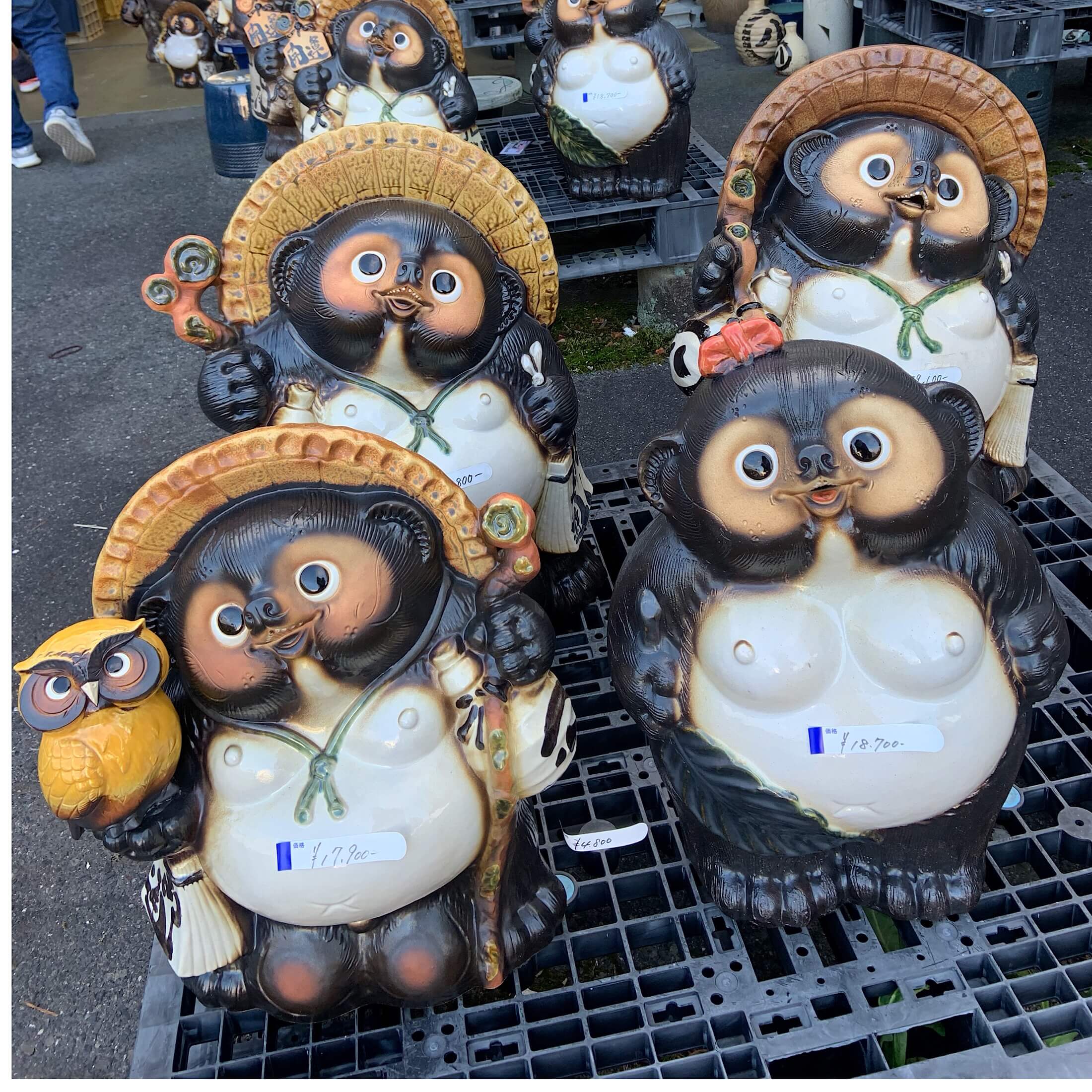
Looking for a souvenir? There is a tanuki for every budget and suitcase size.
Not a tanuki fan? No problem. You’ll also discover lucky frogs, owls, cats, and many other playful ceramic creations. Beyond the animal statues, shops throughout the town offer a wide range of handcrafted pottery, from everyday plates and cups to tea ware and elegant flower vases.
4. Try Pottery Yourself
One of the best experiences in Shigaraki is trying pottery yourself.
Several studios around town offer casual pottery or painting workshops, some lasting only about an hour. Places such as Tokusai Toubo(Marutoku Touki) and Tonchinkan are popular for beginners who want to paint a cup, plate, or small tanuki statue during a short visit.
Pottery painting is also a fun activity for families, and even children around three years old can join. For younger kids, simple pieces like small plates are usually easier to paint than cups or statues.

Painting your own pottery is one of the easiest ways to experience Shigaraki’s ceramic culture.
If you are looking for something more immersive, there are also longer experiences where you can learn traditional Shigaraki pottery techniques directly from local ceramic artists.
At The Miharu Kiln, for example, visitors can spend around three hours hand-shaping pottery using local Shigaraki clay and see a rare traditional climbing kiln through Wabunka’s website. Finished pieces are fired in an old-style wood-fired kiln, creating unique natural ash glazes shaped by flame and smoke.
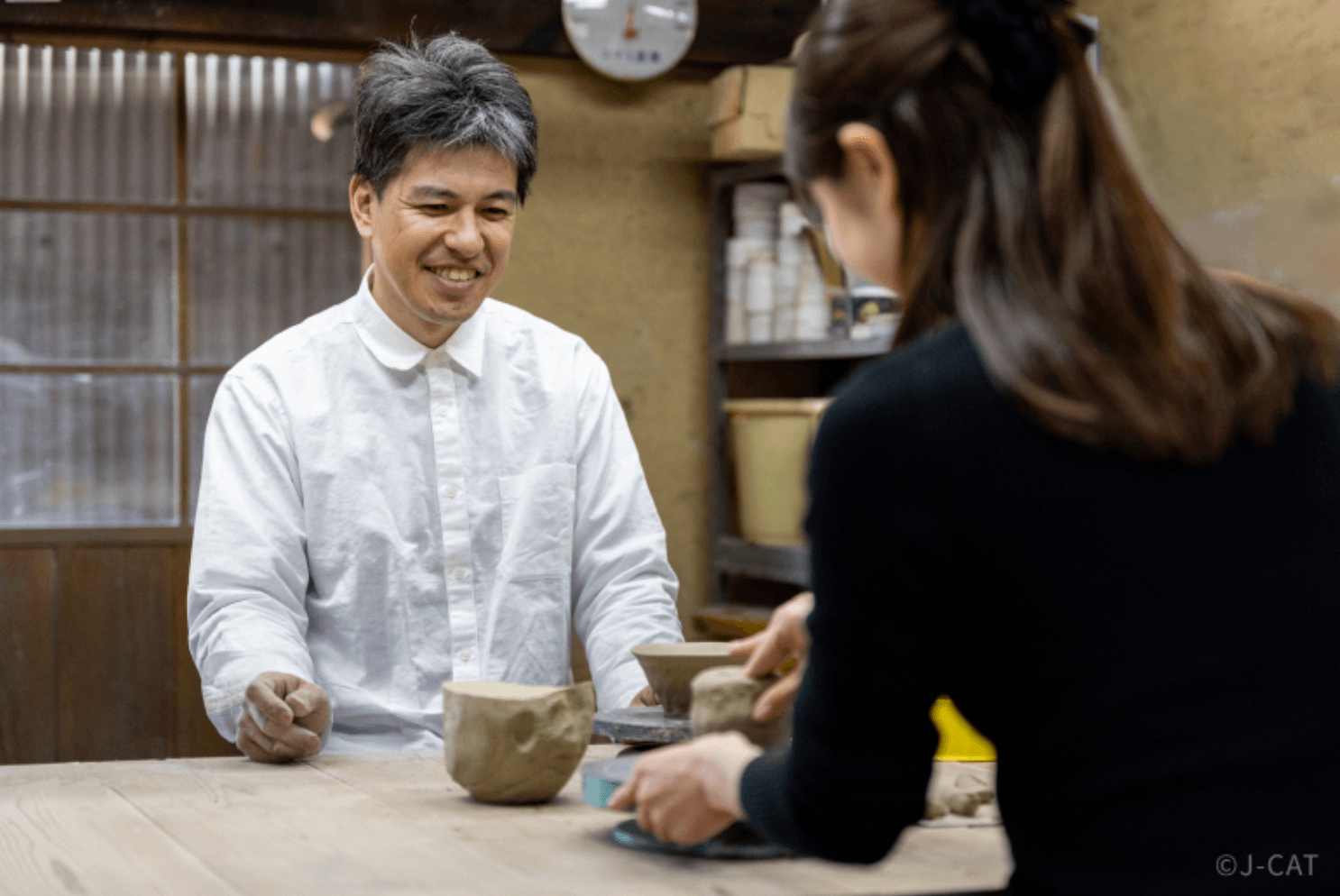
Learn traditional Shigaraki pottery techniques directly from local ceramic artists at Miharugama (photo credit : Wabunka)
Just remember that handmade pottery needs time to dry and be fired in a kiln, so it may take several months before your piece is ready. Many studios only fire their kilns once enough works have been collected. Some studios can also arrange international shipping, so it is worth asking in advance if you would like your pottery sent overseas.
5. More Things to Do in Shigaraki
Beyond pottery, Shigaraki also has relaxing cafés, including some renovated from old climbing kilns. There are hot springs, peaceful countryside scenery, and even farms serving delicious local ice cream.

The countryside around Shigaraki offers more than pottery, including farms and local dairy products.
If you would like to slow down and stay longer, the town also offers various places to stay, from cozy guesthouses to traditional ryokan inns with local meals and onsen baths.
For an especially immersive experience, Rakunyu Ceramic Studio Kochu-an offers overnight programs that combine Shigaraki pottery with traditional tea ceremony culture. Guests can create their own tea ware from local clay, enjoy seasonal kaiseki cuisine, and take part in an intimate tea gathering hosted by ceramic artists and tea masters.
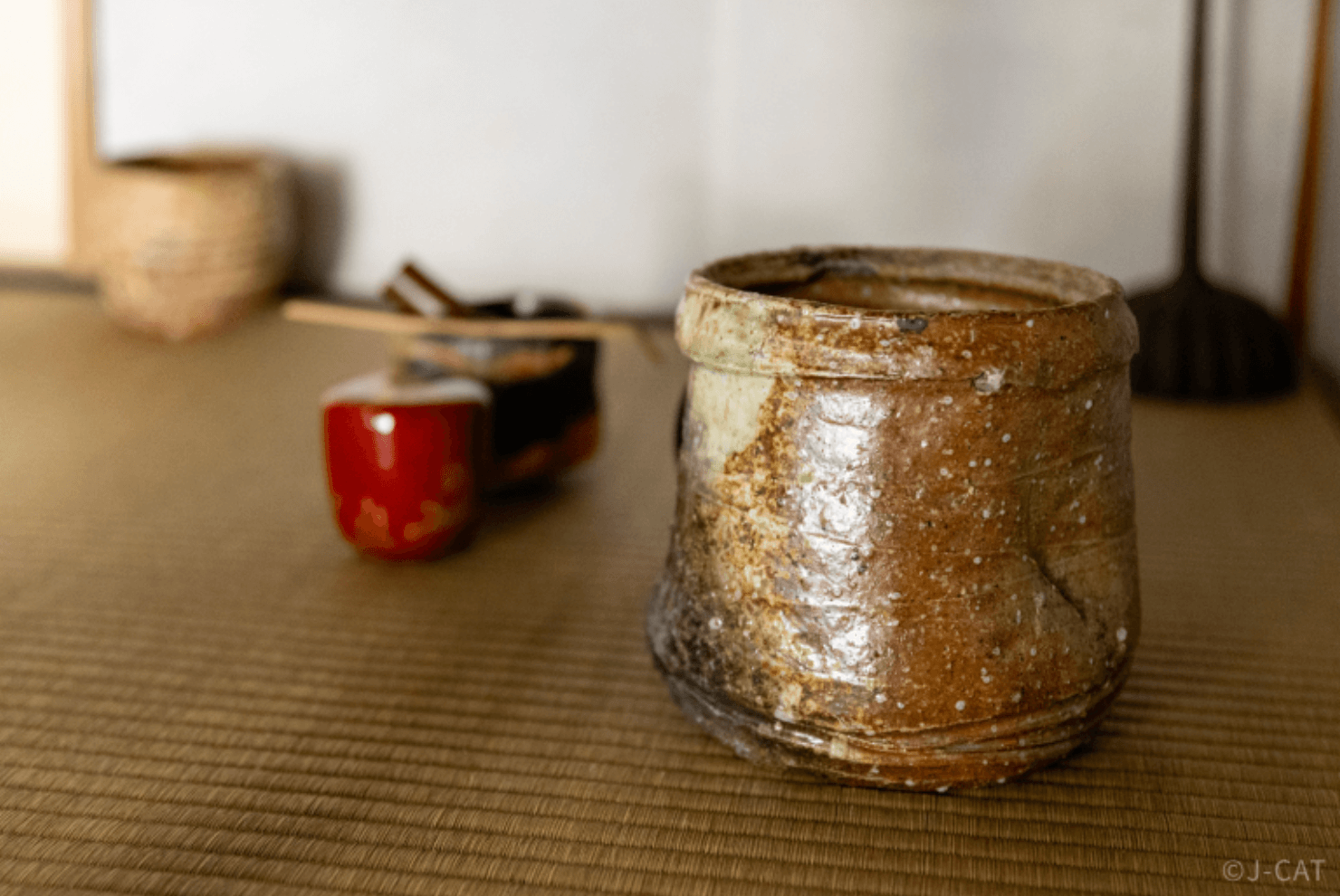
Tea ceremony and pottery come together at Kochu-an, where guests can experience both traditions. Photo credit : Wabunka
Final Thoughts
Shigaraki is more than just a pottery town.
It’s a place where traditional craftsmanship, rural scenery, and playful folklore come together in a uniquely Japanese way.
If you ever want a break from crowded cities like Kyoto or Osaka, hop on a train and spend a day among the tanuki. You may leave with a suitcase full of pottery — and probably a new appreciation for Japan’s most charming trickster animal.
Read more :
Ine no Funaya – a peaceful fishing village –
Travelogue: Himi -a City of Life with the Sea and Fishing
Utsukushigahara – one of the top 100 mountains in Japan-

tokie
最新記事 by tokie (全て見る)
- Shigaraki Pottery Village & Tanuki - 20/05/2026
- Types of Bento Boxes in Japan: How to Choose Yours - 23/04/2026
- How Much English Actually Works in Japan when traveling ? - 15/04/2026