
I’ll never forget the day I accidentally broke the tea bowl my tea teacher had given me. It was a small, delicate bowl, but it meant so much to me—not just as a piece of pottery, but as a gift from someone I deeply respect. When it slipped from my hands and shattered on the floor, I felt a mix of panic, sadness, and guilt.

The tea bowl I cherished from my tea teacher, accidentally broken. This moment inspired me to experience kintsugi, the Japanese art of repairing ceramics.
At first, I thought it was ruined forever. I had always known about kintsugi, the Japanese art of repairing broken pottery, but had never had the chance to try it—this seemed like the perfect opportunity.
What Is Kintsugi?
Kintsugi (literally “golden joinery”) is a traditional Japanese technique that fixes broken ceramic or porcelain using lacquer mixed with powdered gold, silver, or platinum.
Unlike regular repair, kintsugi doesn’t try to hide the damage. Instead, it highlights the cracks and imperfections, turning them into a unique, beautiful part of the object’s story. It’s a philosophy as much as a craft: embracing flaws, valuing history, and finding beauty in imperfection.
To someone unfamiliar with it, think of it as celebrating the scars of an object, much like how we appreciate experiences that shape our lives.
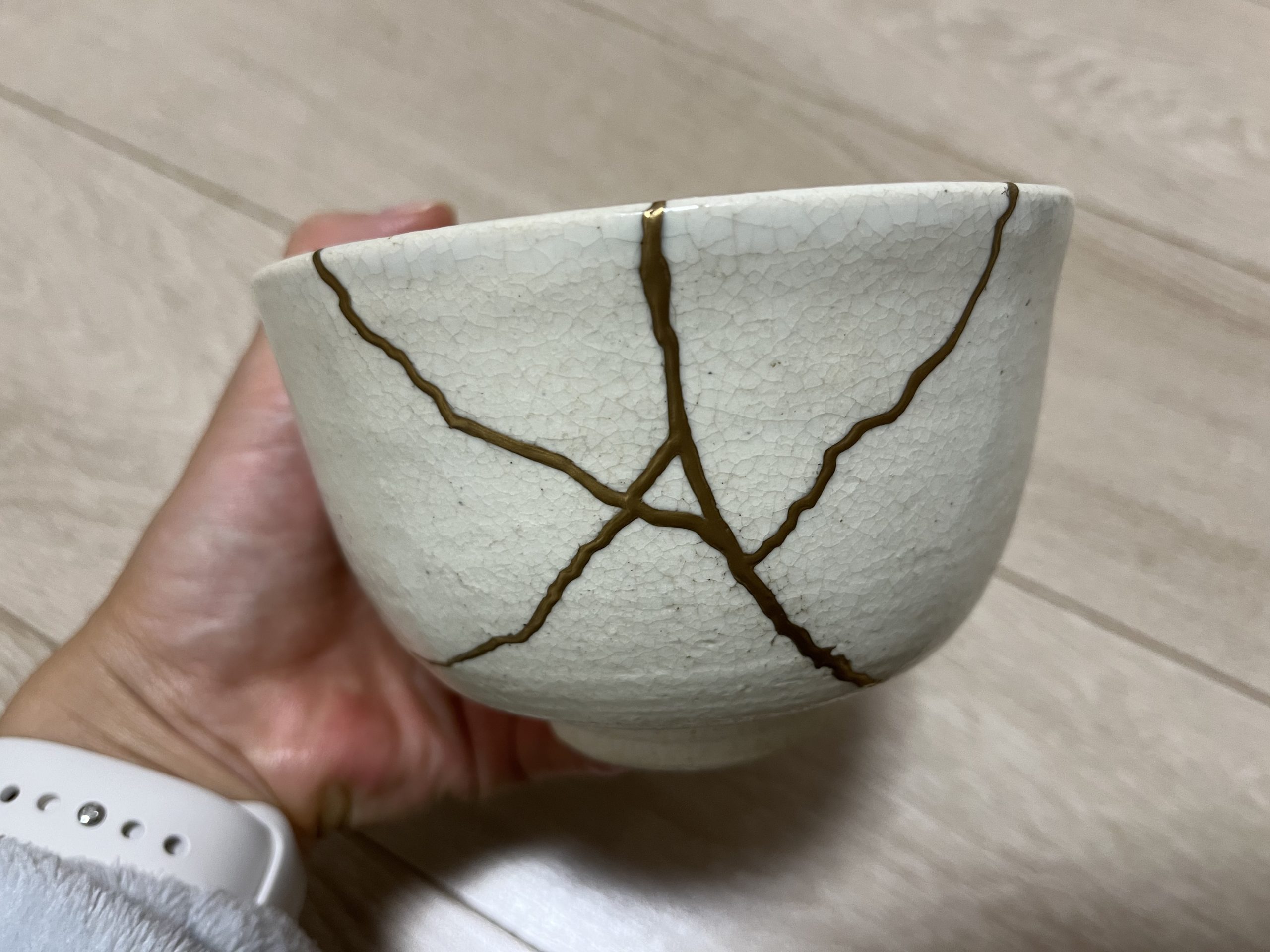
The same tea bowl, beautifully restored with lacquer and gold through kintsugi. The cracks are highlighted, turning the breakage into a unique work of art.
Kintsugi isn’t cheap—sometimes the repair can even cost more than the original bowl—but when it comes to something you truly treasure, being able to use it again makes it worth every penny.
Try Kintsugi Yourself
If you’re ever in Kyoto, Shikata Urushi offers both professional repair services and hands-on workshops. It’s a wonderful chance to experience this craft firsthand.

Shikata Urushi, a Kyoto-based master lacquer studio founded in 1867, where skilled artisans restore ceramics using the traditional kintsugi technique.
Even if you don’t have a broken treasure, you can try kintsugi as a creative and beginner-friendly experience. In just two and a half hours, you can learn two major techniques:

Learning the art of kintsugi at Shikata Urushi in Kyoto, practicing connecting broken pieces (ware) and tracing cracks (hibi) with high-quality Japanese urushi under the guidance of skilled artisan. Photo credit: Wabunka
Ware — connecting broken pieces
Hibi — tracing over minimal cracks with Japanese urushi
Under the guidance of skilled artisans, you’ll work with all-natural, high-quality Japanese urushi and have the option to personalize your piece with different metal powders such as gold, silver, tin, or brass. By the end of the workshop, you’ll have repaired a piece of pottery and gained a hands-on understanding of this centuries-old tradition.
It’s a relaxing, meditative, and incredibly satisfying experience to see a broken tea bowl transformed into something unique. You’ll work with pre-broken pieces, so there’s no need to bring or break anything yourself. This workshop is a fun and accessible way to experience kintsugi and the wabi-sabi philosophy of embracing imperfections.
If you’re curious and want to experience kintsugi yourself, you can find more details about the workshops at Shikata Urushi here: [Wabunka Kintsugi Workshop].
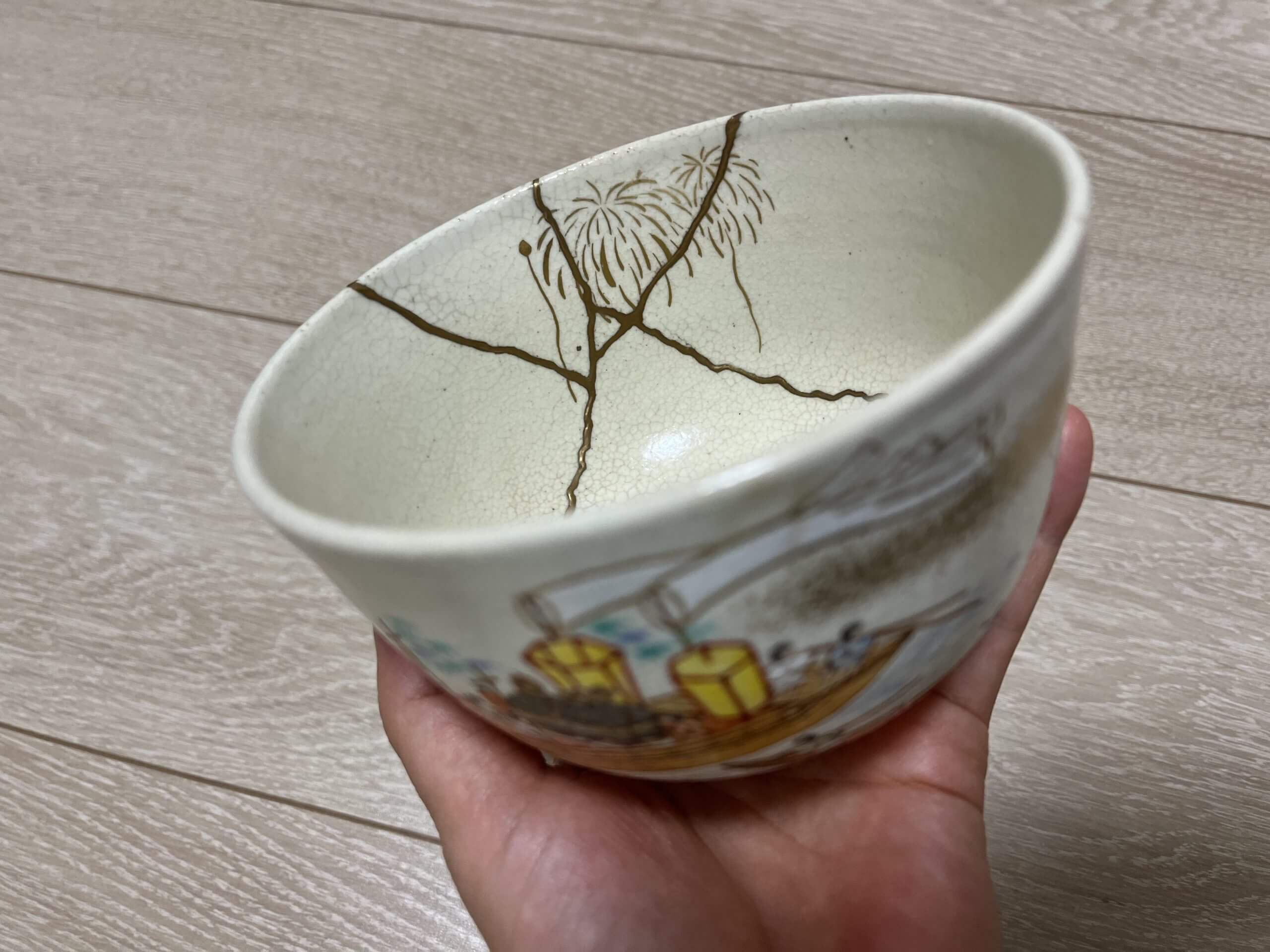
The tea bowl, beautifully restored with gold-filled kintsugi lines, now showcases its Tenjin Matsuri festival design, a famous annual summer festival in Osaka, on the front. The cracks are highlighted, turning the breakage into a unique part of the bowl’s story.
What Kintsugi Changed for Me
My tea bowl’s cracks are no longer a symbol of a mistake—they’re a reminder of care, attention, and the beauty of imperfection. Kintsugi taught me that something broken can still shine.
If you’re curious about other unique workshops, hands-on experiences, or guided local tours in Kyoto and Osaka, we offer a variety of options to suit every interest. From traditional crafts to culinary adventures, you can explore the culture in a fun and authentic way.

tokie
最新記事 by tokie (全て見る)
- Best 4 Okinawa remote Islands Worth the Trip - 09/06/2026
- Shigaraki Pottery Village & Tanuki - 20/05/2026
- Types of Bento Boxes in Japan: How to Choose Yours - 23/04/2026