
When visiting shrines in Japan, you’ll often notice animals like foxes, deer, or even rabbits.
These aren’t just decorations. They are considered messengers of the gods, known as shinshi in Japanese.
While foxes are the most famous, Kansai such as Osaka and Kyoto is home to a variety of shrine animals—each with its own meaning and story.
Here are five you can actually see when exploring the region.
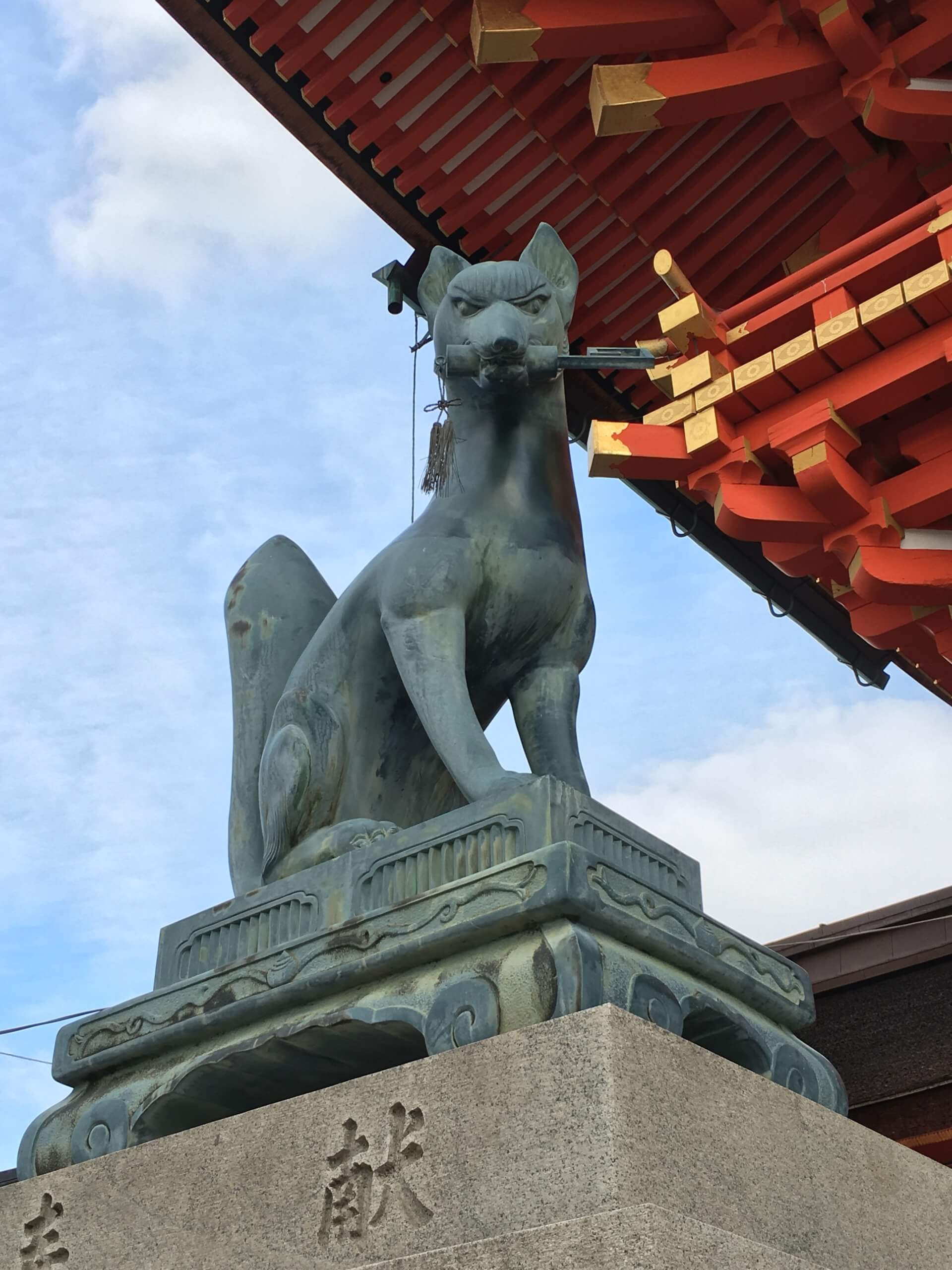
A fox statue at Fushimi Inari Taisha Shrine, believed to be a messenger of the Inari deity, often holding symbolic objects like keys.
Foxes – Messengers of Prosperity
Fushimi Inari Shrine (Kyoto)
Foxes are the most iconic shrine animals in Japan, especially at Fushimi Inari Taisha, the head shrine of all Inari shrines.
If you’ve ever wondered why foxes are at Inari shrines, it’s because they are considered messengers of the Inari deity, associated with rice, agriculture, and business success.
If you look closely, many fox statues hold symbolic objects in their mouths—such as keys to rice storehouses, scrolls, and sacred jewels—each carrying its own symbolic meaning
Walking through the thousands of torii gates, you’ll see these foxes watching over the paths, creating a mysterious and iconic atmosphere.
Visitors with children often enjoy the fox-shaped ema (wooden prayer plaques), where kids can draw their own fox faces and write wishes, making it a fun and interactive cultural experience for families.
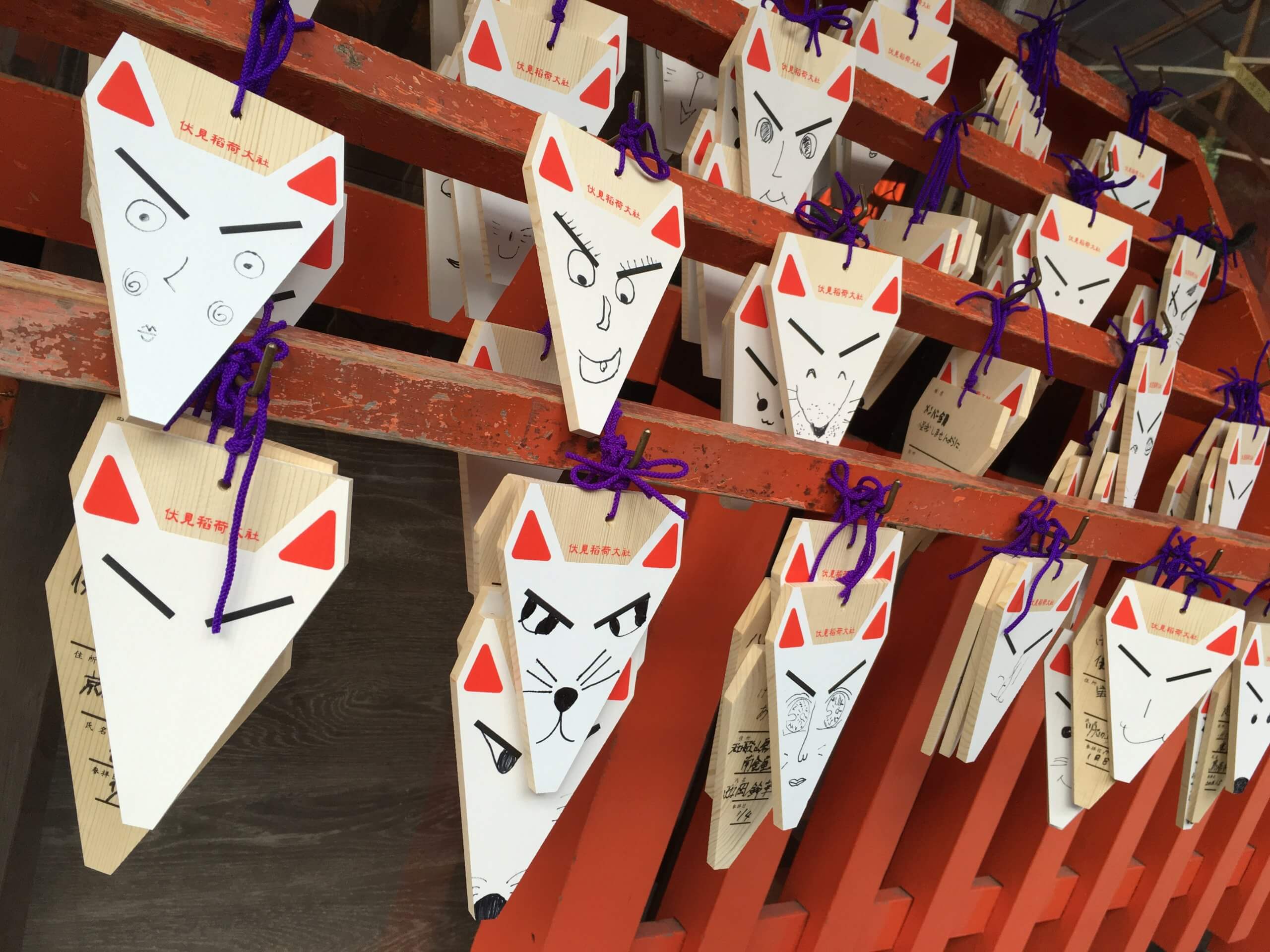
Visitors draw their own fox faces on ema at Fushimi Inari Taisha, creating a fun and interactive cultural experience.
Deer – Sacred Guides of the Gods
Kasuga Taisha Shrine (Nara)
In Nara, deer are not just friendly animals roaming the park—they are considered sacred.
According to legend, a god arrived at Kasuga Taisha riding a white deer, making deer divine messengers.
This belief is why deer have been protected in Nara for centuries.
Visiting Kasuga Taisha and nearby Nara Park offers a rare chance to see these sacred animals up close.
Today, Nara’s deer are officially designated as a natural treasure, and harming them can result in penalties.
Along the shrine’s stone-paved paths, you’ll occasionally see deer standing next to the lanterns, creating an unexpectedly sacred moment. Sometimes they even bow politely, usually hoping for a deer cracker (shika senbei), which makes the experience both playful and memorable.
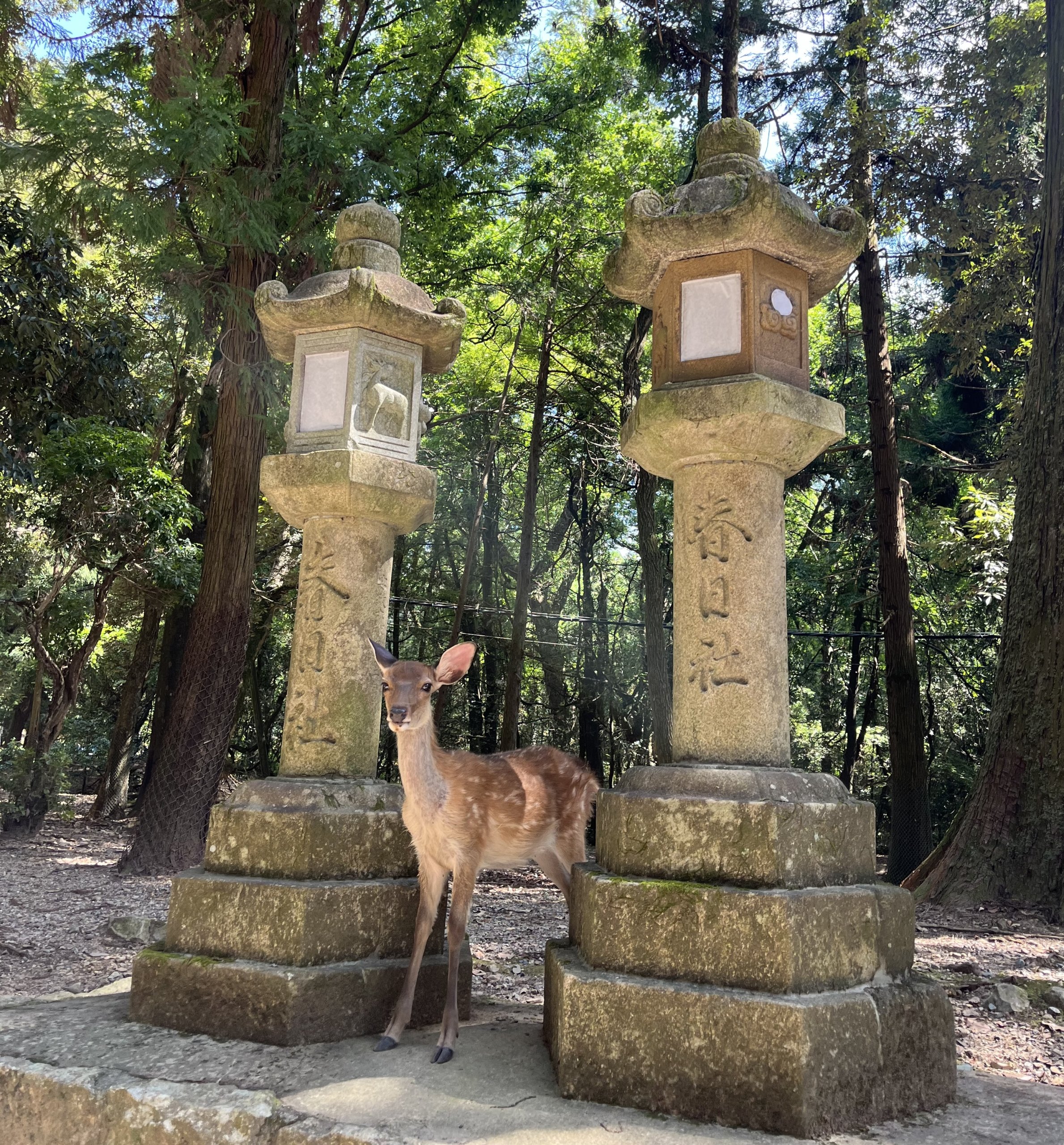
A deer stands quietly beside stone lanterns at Kasuga Taisha Shrine, creating a calm and sacred atmosphere.
At Kasuga Taisha, you can also find omikuji (fortune slips) shaped like deer, adding a charming cultural touch to your visit.
Monkeys – Guardians Against Evil
Hiyoshi Taisha Shrine (Shiga)
At Hiyoshi Taisha, monkeys serve as protective messengers of the gods.
The word for monkey in Japanese, saru, is associated with phrases like “evil goes away” (ma ga saru) and “to excel or win” (masaru), making monkeys highly auspicious symbols.
Because of this, many visitors come here to pray for protection from bad luck, especially during unlucky years (yakudoshi).
You’ll notice monkey motifs throughout the shrine grounds, from decorations to small details, reinforcing their role as guardians.
I personally visited to pray during my own yakudoshi, and the strong presence of these symbols made the experience feel especially meaningful.
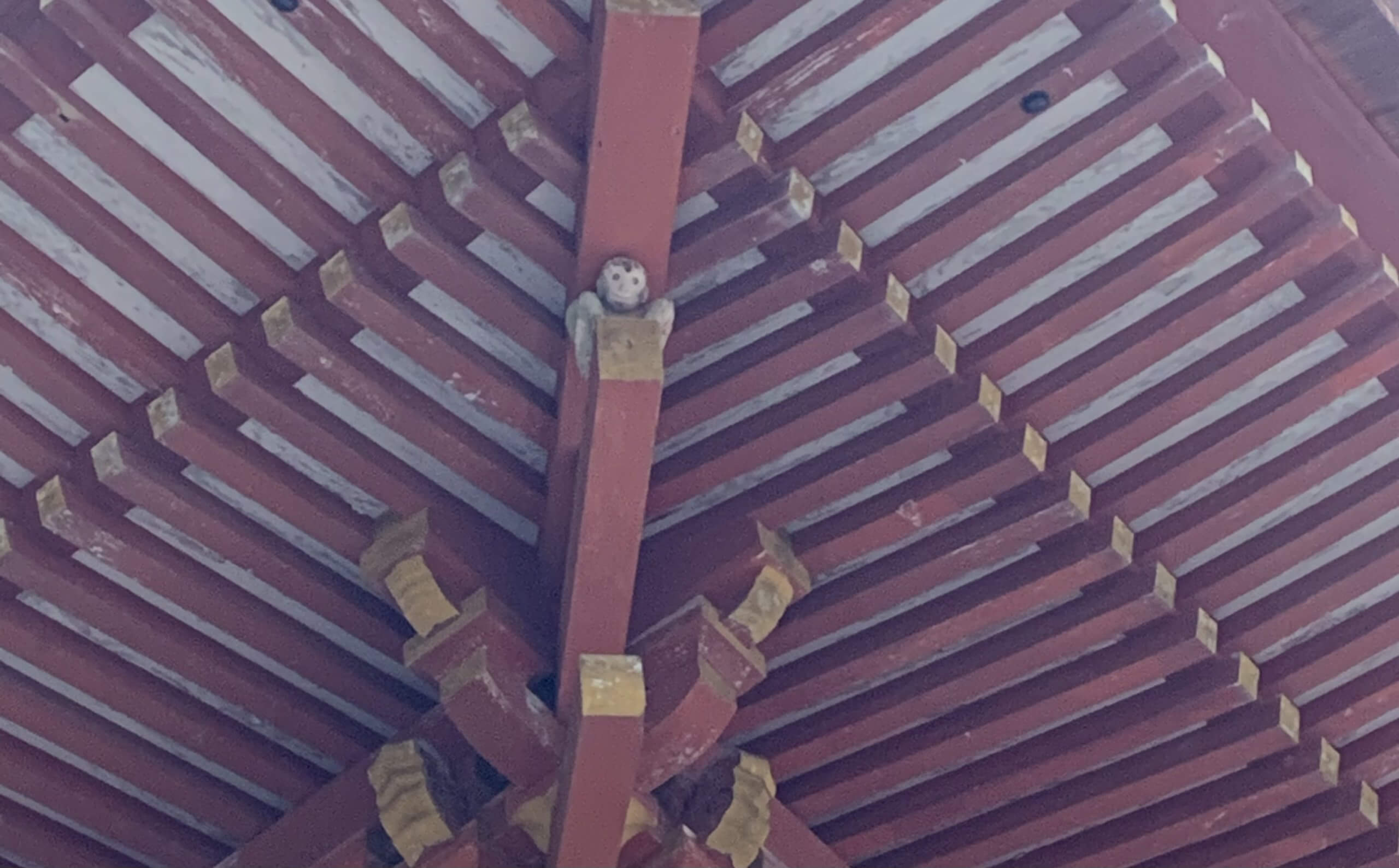
Monkey motifs appear throughout Hiyoshi Taisha Shrine, symbolizing protection and the warding off of evil.
Rabbits – Symbols of Good Fortune and Fertility
Okazaki shrine (Kyoto)
Okazaki Shrine is famous for its many rabbit statues.
Rabbits are associated with fertility and safe childbirth, making this shrine especially popular among those wishing for family blessings.
I once brought a German friend who loves rabbits, and she was absolutely thrilled by the shrine. The sheer number of rabbit figures—on statues, charms, and decorations—makes it a very photogenic and memorable experience.
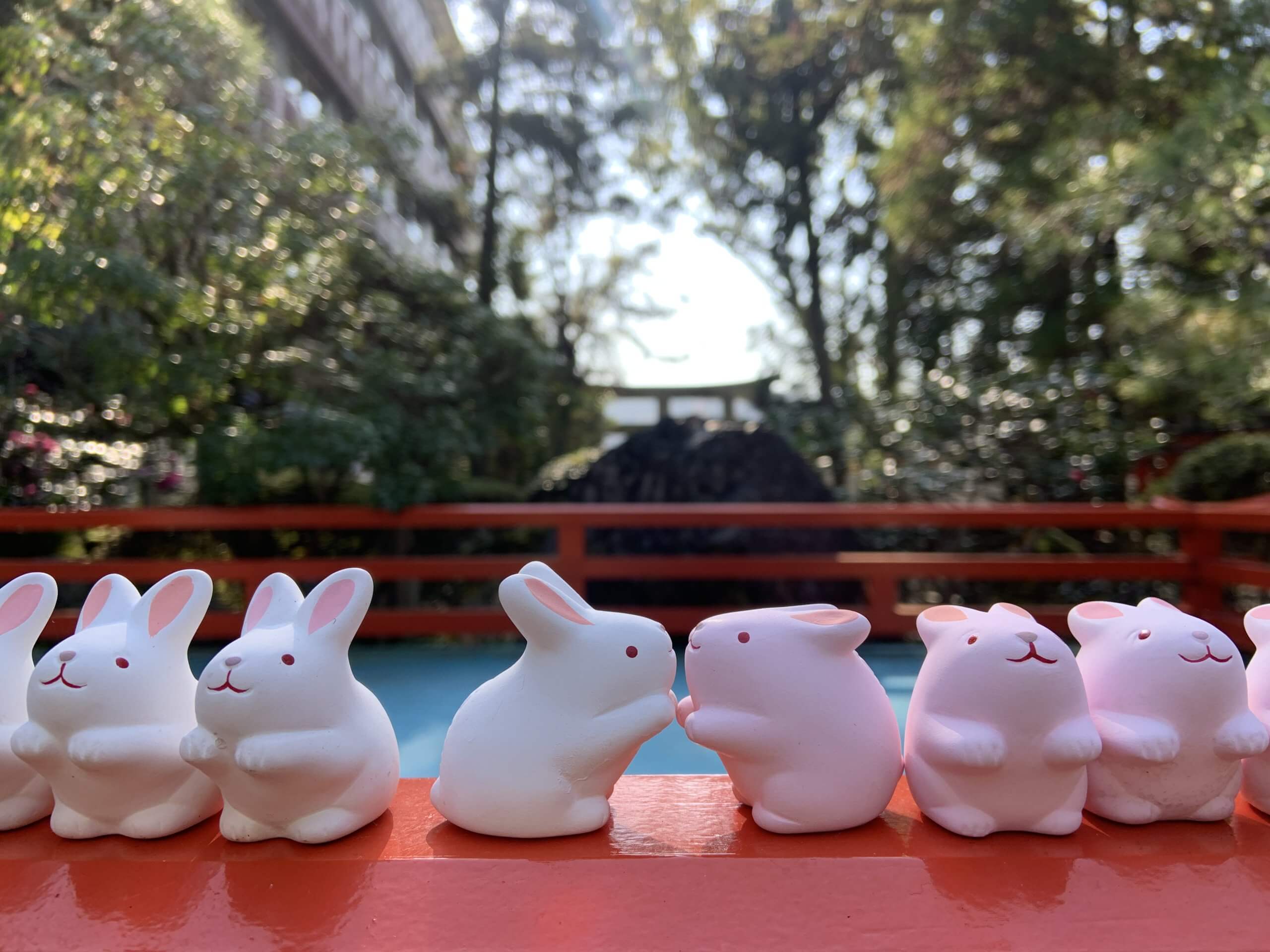
Rabbit-shaped fortune slips lined up at Okazaki Shrine, symbolizing fertility.
Horses – Sacred Vehicles of the Gods
Kamigamo Shrine (Kyoto)
At Kamigamo Shrine, horses play an important role as sacred animals connected to the gods.
The shrine is one of the few places in Japan where live sacred horses (shinme) are still kept. These horses appear on Sundays, national holidays, and festival days (shusse), while normally living at a nearby university.
The shrine is also known for the Kamo Keiba horse race ritual, originally held at the imperial court to pray for peace and abundant harvests, now performed at the shrine.
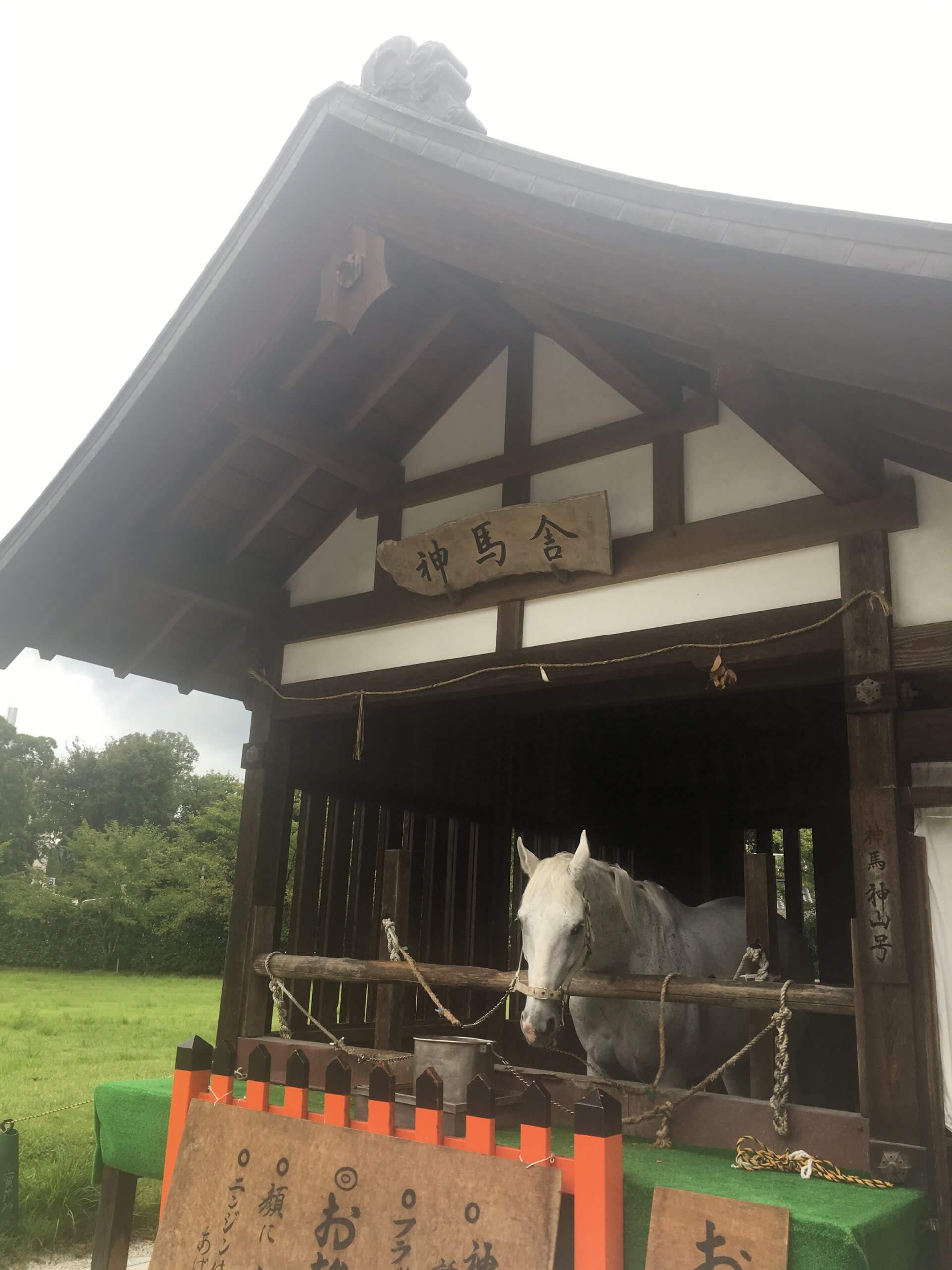
One of the rare shrines where a live sacred horse can still be seen at Kamigamo Shrine.
Interestingly, the shrine is also known for a unique ritual in which crows are said to have performed sumo—adding an unexpected layer of folklore. While I haven’t personally seen the horse events, I have witnessed the “crow sumo” (karasu-zumo) festival, where children playfully wrestle, adding a unique and lively cultural touch to the shrine.
This mix of formal tradition and unusual legend makes Kamigamo Shrine particularly fascinating.
Final Thoughts
From foxes and deer to rabbits and monkeys, shrine animals in Japan are deeply tied to spiritual beliefs and local traditions.
Exploring these shrines offers more than sightseeing—it’s a way to understand how nature and spirituality are connected in Japanese culture.
If you’re traveling in Kansai, try visiting a few of these shrines and see how many sacred animals you can find.
For Japanese visitors, it’s common to visit shrines connected to their zodiac sign or the current year’s animal. But for anyone else, it can be just as fun to explore shrines based on your favorite animal—just pick the one that appeals to you and enjoy the experience!

tokie
最新記事 by tokie (全て見る)
- Types of Bento Boxes in Japan: How to Choose Yours - 23/04/2026
- How Much English Actually Works in Japan when traveling ? - 15/04/2026
- Shrine Animals to See in Kansai and what they mean - 30/03/2026