
Best Pottery Experiences around Osaka/Kyoto

If you’re staying in Osaka, Kyoto, or the surrounding Kansai region and want to experience Japanese pottery, you don’t have to limit yourself to pottery workshops in the city.
Kansai is home to several unique pottery traditions, many of them found outside the region’s major tourist destinations. In this guide, we’ll introduce four pottery traditions and places where you can experience Japanese ceramics:
- Shigaraki-yaki in Shiga
- Tamba-yaki in Tamba-Sasayama, Hyogo
- Kiyomizu-yaki in Kyoto
- Akahada-yaki in Nara
Each offers a different way to discover Japanese ceramics, from visiting historic pottery towns to trying your hand at making your own piece.

Shaping clay on a pottery wheel.
1. Shigaraki Ware: Explore a Historic Pottery Town
Location: Shigaraki, Shiga Prefecture
If you want to do more than simply take a pottery class, Shigaraki is one of the best places in Kansai to experience Japanese ceramics.
Shigaraki is one of Japan’s Six Ancient Kilns, with a pottery tradition that dates back centuries. Unlike a pottery workshop in a major city, visiting Shigaraki means exploring an entire town where pottery has long been part of everyday life.

A Shigaraki Ware teacup and teapot showcasing the warm, rustic character of Shigaraki ceramics.
What makes Shigaraki Ware special?
Shigaraki Ware has traditionally been used to make a remarkably wide range of products, from plates and cups to large water jars, storage jars, tea containers, sake bottles, braziers, and flower pots.
One of its defining characteristics is its coarse, highly heat-resistant clay. When fired, the clay can develop warm colors ranging from beige and pink to reddish brown. Natural effects such as bidoro glass-like glaze and areas of darkened clay created during firing give Shigaraki pottery its distinctive, warm and rustic appearance.
The tradition is also closely connected with Japanese tea culture. From the 14th to 16th centuries, Shigaraki pottery became increasingly important for tea culture in Japan. During the Edo period (1603–1868), production expanded beyond tea ceramics to include everyday household items such as storage jars, sake bottles, and cooking pots.
Today, Shigaraki produces everything from tableware and decorative pieces to garden products, tiles, lighting, and large ceramic objects.
And, of course, the Shigaraki tanuki has become one of the area’s most recognizable symbols.
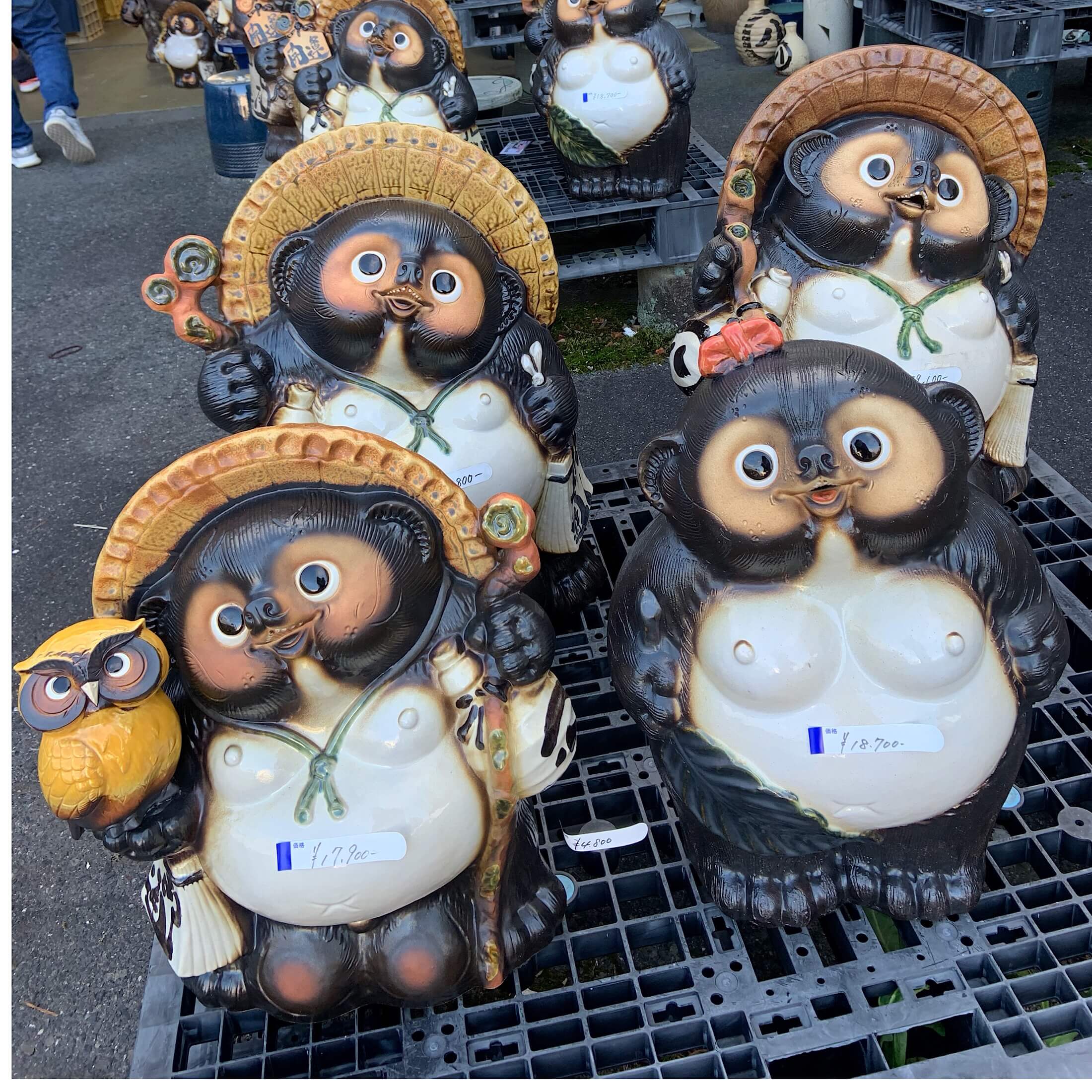
Tanuki statues are a familiar sight throughout Shigaraki, one of Japan’s best-known pottery towns.
What can travelers do in Shigaraki?
A pottery experience is only one part of visiting Shigaraki.
You can:
・Make and buy pottery: You can join a pottery workshop at a local studio and browse the many shops and galleries selling Shigaraki Ware.
・Explore a town full of tanuki: Tanuki statues are everywhere in Shigaraki, making a walk around the town fun even if you are not specifically looking for pottery.
・Enjoy art and museums: The Shigaraki Ceramic Cultural Park offers exhibitions and outdoor art, while the nearby MIHO MUSEUM is another interesting stop for art and architecture lovers.
・Explore by bicycle: Rental bicycles are available in the area, giving you more freedom to get around. If you’re up for a longer ride, you can even reach places such as waterfalls and tea fields by bicycle.

A pottery workshop in Shigaraki where visitors can paint their own ceramic piece.
Getting to Shigaraki from Osaka or Kyoto
Shigaraki is possible as a day trip from both Osaka and Kyoto, although it is more time-consuming than visiting a workshop in central Kyoto.
By train, the journey takes approximately 2 hours from Osaka and 1.5 hours from Kyoto.
From Kyoto or Osaka, travel via Kusatsu and Kibukawa, then take the Shigaraki Kogen Railway to Shigaraki Station.
Many pottery studios and shops are within roughly 1–2 km of Shigaraki Station, so exploring the area on foot is possible.
By car, Shigaraki takes approximately 1.5 hours from Osaka and 1 hour from Kyoto, depending on traffic.

The Shigaraki Kogen Railway connects Shigaraki with Kibukawa, making it possible to reach the pottery town by train.
Is Shigaraki worth a day trip?
Yes, especially if you are interested in pottery and want to see a different side of Japan outside the major cities. Shigaraki is possible as a day trip from both Osaka and Kyoto, although you will need to allow more travel time than for destinations within the cities.
If you have more time, however, staying overnight in Shigaraki can make the experience much more immersive. There are a few unique experiences that go beyond a typical pottery workshop.
Stay at Kochu-an and experience Shigaraki pottery and tea culture
At Rakunyu Ceramic Studio Kochu-an, you can spend two days learning about Shigaraki Ware under the guidance of the studio’s third-generation head, a ceramic artist and tea master. The experience starts with gathering and preparing local clay before you make your own tea-ceremony ware.
An optional nighttime chaji, or formal tea ceremony, is also included, with seasonal kaiseki cuisine, sake, wagashi, and matcha. This is a particularly interesting option if you want to experience both Shigaraki pottery and Japanese tea culture in depth.
→ Learn more about the Kochu-an overnight pottery experience
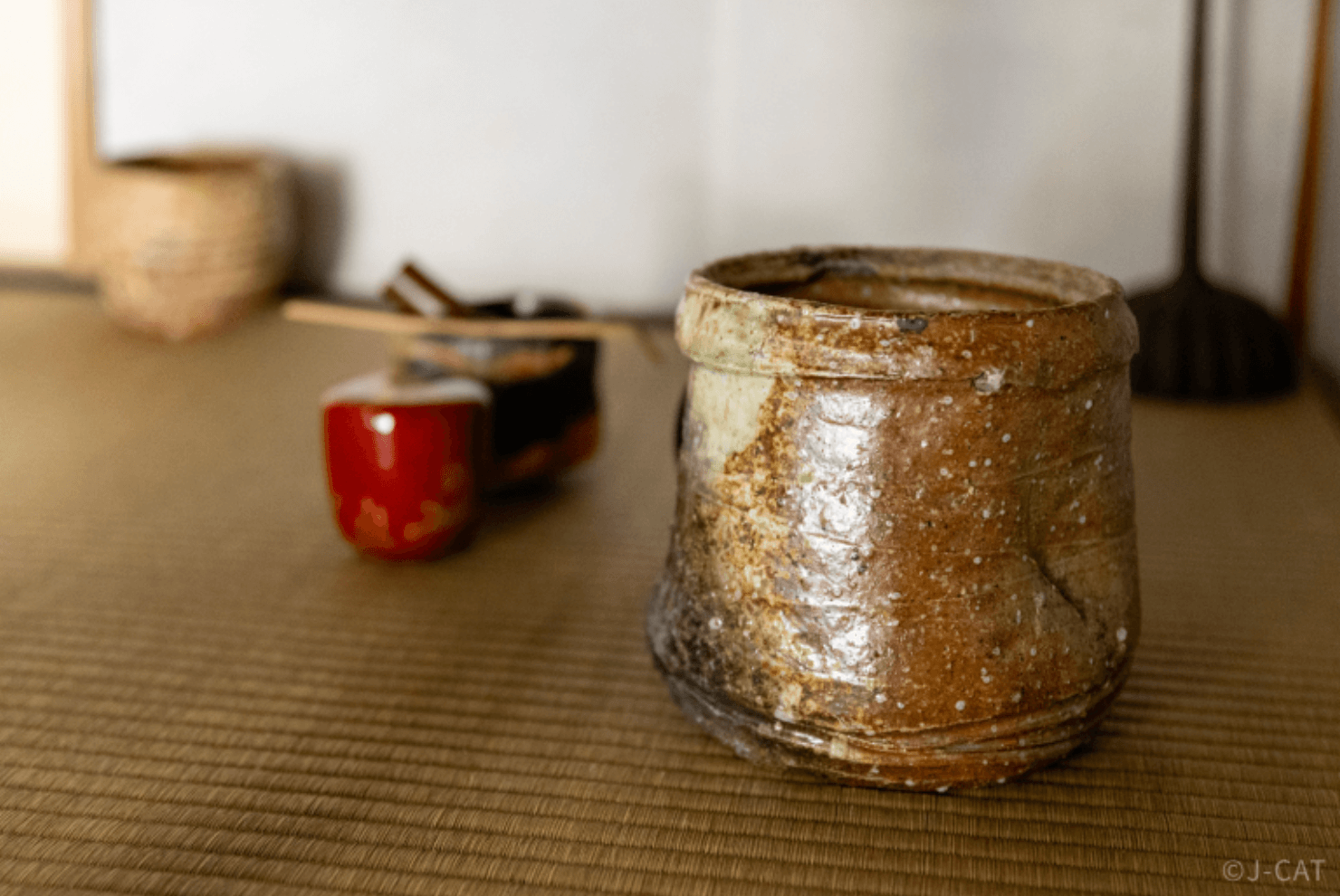
Tea ceremony and pottery come together at Kochu-an, where guests can experience both traditions. Photo credit : Wabunka
Stay at a private auberge in Shigaraki
For a completely different kind of stay, Keyaki no Yado EN is a private auberge where the focus is on food, local ingredients, and the atmosphere of Shigaraki.
The entire villa is reserved for one group, and a chef prepares a gourmet Japanese dinner using local ingredients. Guests can also learn how to make dashi and join the chef to gather seasonal ingredients in the surrounding area.
This is a good option if you want to experience Shigaraki through food, hospitality, and local culture rather than focusing specifically on pottery.
→ Learn more about the Keyaki no Yado EN stay

A Japanese breakfast prepared with seasonal ingredients gathered with the chef during an overnight stay at Keyaki no Yado EN in Shigaraki. Photo credit : Wabunka
If you are simply looking for a pottery workshop, a day trip is enough. But if you want to slow down and experience more of what Shigaraki has to offer, an overnight stay gives you a very different way to experience the town.
Read more: Shigaraki Pottery Village & Tanuki
2.Tamba Ware: See Traditional Kilns and Pottery Studios
Location: Tamba-Sasayama, Hyogo Prefecture
Tamba Ware, or Tamba-yaki, has been made in the Tachikui area of Tamba-Sasayama since around the late 12th to early 13th century. The area had clay suitable for pottery, and farming was difficult in some parts of the region, which helped pottery-making develop as a local industry.

A cup and plate made with Tamba Ware, a traditional pottery from Hyogo Prefecture.
A pottery tradition shaped by climbing kilns
One of the most distinctive features of Tamba-yaki is its long tradition of using climbing kilns, or noborigama.
Until the late 16th century, potters in the area mainly used underground tunnel kilns. Around 1611, a Korean-style semi-above-ground climbing kiln was introduced, marking the beginning of a new era for Tamba-yaki.
The climbing kiln became an important part of the area’s pottery tradition, and many pottery studios in Tamba still have their own traditional climbing kiln.
Firing in these kilns is a major undertaking. The kiln can be fired continuously for three days and three nights, with temperatures reaching around 1,300°C. Family members, apprentices, and other workers at the studio may all take part in the process.

The historic Tachikui climbing kiln in the Tamba-yaki pottery area of Tamba-Sasayama.
Pottery shaped by fire
The appearance of Tamba-yaki is strongly influenced by the local clay and the firing process.
Some pieces are made with a distinctive reddish clay called akado-be, while ash from the wood fire can settle on the pottery during firing and melt on the surface, creating unique colors and patterns.
Tamba-yaki also includes many pieces decorated with shinogi, a technique in which a potter uses a tool such as a spatula or carving tool to create raised ridges by removing clay from the surface. The result has a simple, rustic appearance while still feeling modern, and these pieces are often easy to use with both Japanese and Western-style meals.
Of course, not all Tamba-yaki is limited to these traditional techniques. Today, pottery studios produce a wide variety of tableware, flower vases, and other ceramics, including pieces with colorful glazes.
What can travelers do in Tamba-Sasayama?
A trip to the Tamba-yaki area can easily be combined with other things to see and eat around Tamba-Sasayama.
- Make and buy pottery: Join a pottery workshop at a local studio, or browse the many pottery shops and galleries to find your own piece of Tamba-yaki. : See who makes pottery there
- Visit the Tachikui climbing kiln: The historic Tachikui Climbing Kiln is one of the highlights of the pottery area and offers a glimpse into the traditional firing techniques that are still part of Tamba-yaki today.
- Explore the historic castle town: If you have a car, you can continue to central Tamba-Sasayama and explore Sasayama Castle and the Kawaramachi Tsumairi Merchant Houses. Many cafes and restaurants in the area also serve food using Tamba-yaki tableware, so you can enjoy the local pottery as part of your meal.
- Walk around Fukusumi: The Fukusumi Traditional Buildings Preservation District is another historic area worth visiting. Its preserved traditional buildings and old streets make it a pleasant place to explore at a slower pace.
- Enjoy seasonal local food: If you visit in autumn, look out for local specialties such as fresh black soybean edamame and chestnuts. Tamba-Sasayama is also famous for botan nabe, a traditional wild boar hot pot.
- Stay overnight: There are several places to stay around the historic castle town, so you don’t necessarily have to fit everything into a day trip. Staying overnight allows you to explore the town at a more relaxed pace and enjoy its restaurants and traditional atmosphere in the evening.
With pottery, historic streets, traditional architecture, and seasonal food all within the wider area, Tamba-Sasayama works well as a full-day trip rather than simply a destination for a pottery workshop.

Fresh black soybean edamame is one of the seasonal specialties of Tamba-Sasayama around October.
Getting to Tamba-Sasayama from Osaka or Kyoto
The Tamba-yaki area is about 2 hours from Osaka and 2.5 hours from Kyoto by public transportation.
A common route is to take the JR Fukuchiyama Line to Aino Station, then take a bus from the station toward the Tamba-yaki area.
However, getting around once you arrive can be difficult without a car. Buses run infrequently, often only once every one or two hours, so visiting several pottery studios requires careful planning around the bus schedule.
For most travelers, renting a car is the more practical option if you want to explore the pottery area at your own pace. By car, it takes approximately 1 hour from Osaka and 1.5 hours from Kyoto, depending on traffic.
If you are traveling by public transportation, it is still possible to visit, but check the bus timetable in advance and plan your pottery studio visits around the available services.

Sasayama Castle in central Tamba-Sasayama, a historic area that can be combined with a visit to the Tamba-yaki pottery district.
3. Kiyomizu-yaki – Try Pottery While Visiting Kyoto
Location: Kyoto
What is Kiyomizu-yaki?
Kyo-yaki and Kiyomizu-yaki are traditional ceramics from Kyoto. Kyo-yaki developed around the eastern foothills of Kyoto from the early Edo period (17th century), alongside the growing popularity of the Japanese tea ceremony. Kiyomizu-yaki, meanwhile, was originally made around Gojozaka, the approach to Kiyomizu-dera Temple.
Today, the two names are generally used together to describe ceramics made in Kyoto.
Unlike some pottery traditions that are defined by a particular style or technique, Kyo-yaki and Kiyomizu-yaki have no single fixed style. Kyoto potters have adopted techniques and materials from different parts of Japan, while developing their own delicate painting, elegant shapes, and decorative styles.
This variety is part of what makes Kyoto ceramics distinctive. As the cultural center of Japan, Kyoto attracted skilled craftsmen, high-quality materials, and the patronage of temples, shrines, the imperial family, and aristocratic households. As a result, traditional techniques and new ideas from different periods have continued to coexist.
Today, Kyo-yaki and Kiyomizu-yaki include everything from tea ceremony utensils and fine tableware to everyday dishes, decorative objects, and contemporary works of art. One important part of the tradition is that both throwing on the pottery wheel and decorative painting are done by hand.
For travelers, this means that a pottery experience in Kyoto can be more than simply making a piece of pottery. You can also see the wide variety of styles created by different studios and artists, and find pieces that range from traditional tea ware to ceramics designed for everyday use.

A Kiyomizu-yaki incense burner showcasing the detailed craftsmanship of Kyoto ceramics.
What can travelers do in Kyoto?
If you want to experience Kyo-yaki and Kiyomizu-yaki for yourself, there are several ways to enjoy Kyoto’s ceramic tradition beyond simply visiting a shop.
- Try a pottery experience: Join a workshop and learn how to make your own Kyo-yaki or Kiyomizu-yaki pottery with guidance from a local artisan.
- Visit pottery studios and kilns: Some workshops also give you a chance to see how Kyoto ceramics are made and learn about the history and techniques behind them.
- Combine pottery with sightseeing: A pottery experience can easily be added to a Kyoto itinerary, especially if you are already visiting areas around Kiyomizu-dera and Higashiyama.
- Buy Kyoto ceramics: Kyoto has a wide variety of pottery shops and studios where you can find everything from traditional tea ware to everyday tableware and decorative pieces.
Two tea bowls made during a Kiyomizu-yaki pottery experience in Kyoto.
Recommended pottery experiences in Kyoto
If you’d like to do more than simply browse ceramics, these two experiences offer different ways to get hands-on with Kyoto’s pottery tradition.
Shoukoku Kiln – Learn from a traditional Kyoto kiln
At Shoukoku Kiln, a pottery studio with more than 100 years of history, you can learn about Kyo-yaki and Kiyomizu-yaki while visiting the kiln and working with an experienced artisan.
Depending on the experience, you can hand-build or paint your own pottery, while also learning about the history and craftsmanship of Kyoto ceramics. You can even have your name inscribed on a piece made by an artisan using an electric pottery wheel. The experience also includes matcha and wagashi served on Shoukoku Kiln’s own tableware, making it a good choice if you want a more cultural and in-depth introduction to Kyoto pottery.
→ Learn more about the Shoukoku Kiln pottery

Artisan Shokoku Kanoh explains the history and craftsmanship of Kyo-yaki pottery at Shoukoku Kiln in Kyoto. Photo credit : Wabunka
Kawai Kobo – Try the pottery wheel yourself
If you specifically want to try throwing pottery on a wheel, Kawai Kobo offers a different type of experience.
The studio has three generations of history and continues the traditions of Kyo-yaki folk-kiln pottery. Under the guidance of the third-generation head of the studio, you can make two pieces of your own pottery, such as a yunomi cup or chawan bowl, using a pottery wheel. While you’re there, you can also see the family’s ceramics and hear about their work before enjoying matcha and snacks served in the studio’s own pottery. Wabunka guests can also take home a yunomi cup made by the studio’s head potter as a souvenir.
→ Learn more about Kawai Kobo pottery

Learning how to make Kyo-yaki pottery on a wheel at Kawai Kobo in Kyoto. Photo Credit : Wabunka
Both are good options, but they offer a slightly different experience: Shoukoku Kiln is particularly interesting if you want to learn about Kyoto’s ceramic tradition and visit a historic kiln, while Kawai Kobo is a good choice if trying the pottery wheel yourself is the main attraction.
4. Akahada Ware – Discover Nara’s Traditional Pottery
Location: Nara, Nara Prefecture
What is Akahada Ware?
Akahada-yaki (Akahada Ware) is a traditional pottery style from Nara. The origin of the name “Akahada” is said to have two possible explanations: it may come from a local place name, or from the reddish color of the clay, which contains a relatively high amount of iron.
Akahada-yaki is known for its soft, creamy-white surface and gentle, warm appearance. Potters make a wide range of pieces, including flower vases, tea ceremony utensils, water containers, and decorative objects.
One of the most distinctive features of Akahada-yaki is Nara-e, a style of decorative painting often applied to the surface of the pottery. Nara-e traditionally features simplified figures, houses, pine trees, and other motifs, often framed by two red lines. The style was inspired by illustrated Buddhist manuscripts and later developed to incorporate scenes and motifs associated with Nara, including deer, landscapes, and stories from the region.
Today, Akahada-yaki is still produced by seven kilns scattered around Nara City and neighboring Yamatokoriyama. This makes it a particularly interesting pottery tradition to explore if you want to discover a side of Nara beyond its famous temples and deer.

Akahada-yaki is Nara’s traditional pottery, known for its warm colors and charming Nara-e decorations.
What can travelers do in Nara?
Akahada-yaki kilns are not located around the main sightseeing areas such as Nara Park, so you will usually need to use a local train and taxi to reach them. However, you can still combine a visit to a kiln with a typical Nara sightseeing itinerary.
For example, you could spend the morning visiting Nara Park and Todai-ji Temple, then head to an Akahada-yaki kiln in the afternoon for a pottery experience or to see the work of local artisans.
Depending on the kiln, travelers may be able to:
- Visit a local kiln: Learn about Akahada-yaki directly from local artisans, see how the pottery is made, and, at some kilns, see a traditional climbing kiln (noborigama).
- Try a pottery experience: Some Akahada-yaki kilns offer hands-on experiences where you can make your own piece.
- Browse and buy Akahada-yaki: See the distinctive creamy-white ceramics and Nara-e designs up close, and purchase a piece as a souvenir.

Nara’s famous deer freely roam the park around the city’s historic temples and shrines.
Read more: Things to Do in Nara Beyond the Deer
Things to Know Before Your Pottery Experience
How long does a pottery experience take?
The length varies considerably depending on the type of experience.
A simple pottery-wheel experience may take less than an hour, while a more comprehensive workshop or visit to a pottery village can take several hours or even a full day.
Always check the estimated duration when booking.
Can I take my pottery home?
Usually, not immediately.
After you make your piece, it needs to dry completely and then be fired in a kiln. Because pottery studios generally wait until they have enough pieces to fill a kiln before firing, it can take a month or more to receive your finished pottery. Some studios may take several months, and in some cases, the process can take close to four months.
If you are traveling internationally, check whether the studio offers overseas shipping before booking your pottery experience. This is especially important if you will have already left Japan by the time your piece is ready.

A handmade pottery piece after finishing the shaping process on the pottery wheel.
What should I wear?
Pottery can get messy, especially when working with a pottery wheel.
Wear clothes and shoes that you don’t mind getting a little dirty. Avoid loose sleeves or anything that could interfere with working at the wheel.
If you have long nails or nail extensions, keep in mind that clay can get underneath your nails, and long nails can also make it more difficult to shape the clay. If you have a pottery wheel experience planned, you may want to keep your nails relatively short.
Final Thoughts
If you’re traveling around Osaka, Kyoto, or the wider Kansai region, pottery can be an easy way to experience a different side of Japan beyond the major tourist attractions. Whether you visit a pottery town like Shigaraki or Tamba, join a workshop in Kyoto, or seek out the lesser-known Akahada Ware in Nara, each destination offers a different connection to local craftsmanship.
And the best part?
You may return home with a handmade piece that reminds you of your trip to Japan.
- Things to Do in Nara Beyond the Deer
- Kumano Kodo Travel Guide: Our 2-Night, 3-Day Itinerary from Osaka
Related posts
-
 Japanese Autumn Foods: 9 Seasonal Foods to Try in Japan
-
Kumano Kodo Travel Guide: Our 2-Night, 3-Day Itinerary from Osaka
-
Things to Do in Nara Beyond the Deer
-
Is Japan Family-Friendly? Tips for Traveling Japan with Kids
-
Osaka to Kyoto: Which Train to Take?
-
Best 4 Okinawa remote Islands Worth the Trip
-
Shigaraki Pottery Village & Tanuki
-
Types of Bento Boxes in Japan: How to Choose Yours


